Choosing a Panax ginseng root extract manufacturer in 2026 takes more than comparing prices or polished product pages. Buyers need to understand what is inside the extract, how consistently it is produced, and whether its documentation can be independently reviewed. A clear specification should identify the plant part, extraction method, carrier ingredients, and ginsenoside profile. Details matter: a certificate of analysis should match the lot number on the drum, not merely describe a typical batch.
This guide examines manufacturers through practical criteria, including traceable sourcing, quality-control systems, testing transparency, production capacity, and responsiveness to technical questions. Look for evidence such as batch-specific test reports, contaminant screening, and a defined process for handling deviations. Ask how the supplier controls moisture and packaging; both can affect storage stability. Vague answers are worth noticing.
No supplier is perfect. A large producer may offer reliable capacity but less flexibility, while a smaller specialist may provide closer technical support yet have longer lead times. The right choice depends on the intended product, required specifications, and the buyer’s own quality procedures. Claims like “premium” or “standardized” need supporting data. Even a well-presented dossier deserves careful review.
The manufacturers discussed here should be treated as candidates for evaluation, not as a universal ranking. Confirm current certifications and product details directly, since capabilities and documentation can change. A measured comparison is less exciting than a top-ten promise, but it is more useful when a real purchasing decision is on the table.
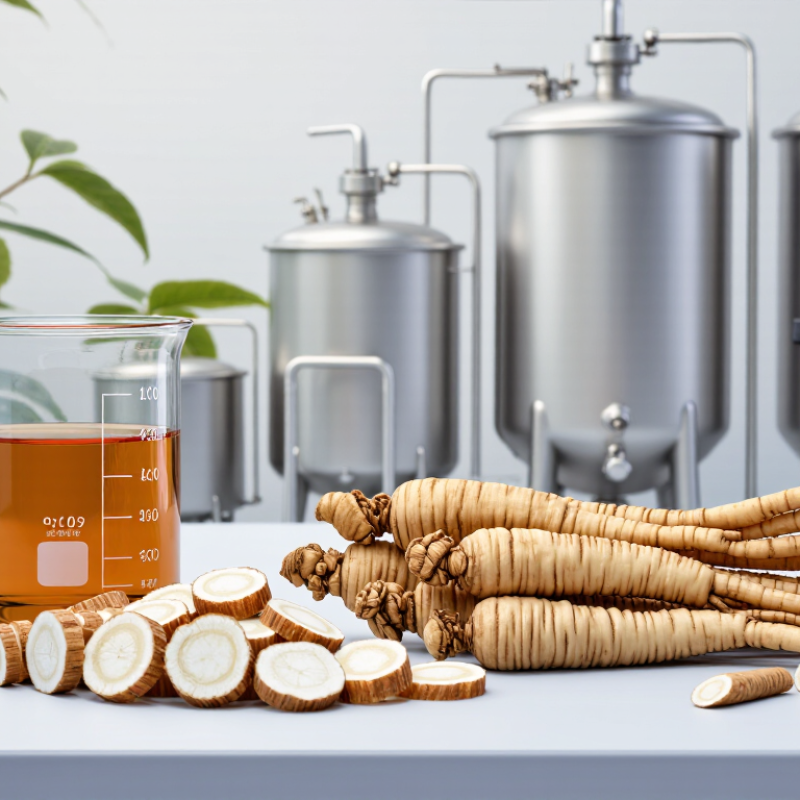
Panax ginseng C.A. Meyer is Asian ginseng, not American ginseng (Panax quinquefolius). The distinction matters: species, growing conditions, and harvest age all affect root composition. Kew’s Plants of the World Online records P. ginseng as an accepted species native to parts of East Asia. Commercial cultivation is concentrated in Korea and northeastern China, with smaller production areas in the Russian Far East. Cool conditions and shaded beds suit the crop. It is a slow one.
The World Health Organization’s monograph on medicinal plants describes harvesting ginseng roots from plants aged four to six years. That range is not a quality guarantee. Root size, drying, storage, and identity testing also matter. A mature root may show a pale, branching body with fine rootlets, but appearance alone cannot confirm species or active-compound levels. Better records connect each lot to its growing region and harvest year.
For buyers assessing extract suppliers in 2026, ask for botanical identification, harvest-age documentation, and batch-specific testing. The WHO monograph gives a useful age reference; it does not establish that every four-year root matches a six-year root. That is an awkward gap in simple sourcing claims. A clear specification should state the species, root part, extract ratio, and test method, rather than relying on “premium” wording.
A sourcing and product-comparison guide to the botanical identity, major growing regions, harvest age, and verification factors relevant to Panax ginseng root extracts. It does not rank or identify individual manufacturers.
| Comparison Dimension | Verified General Information | What Buyers Should Check |
|---|---|---|
| Accepted botanical identity | Panax ginseng C.A.Mey. is an East Asian ginseng species in the Araliaceae family. “Asian ginseng” and “Korean ginseng” are common names, but common names alone do not establish species identity. | Request the Latin binomial on the specification and batch documents. Confirm that the material is not Panax quinquefolius (American ginseng) or another Panax species. |
| Principal growing regions | Cultivated P. ginseng is associated especially with the Korean Peninsula and northeastern China, including Jilin Province. The species also occurs in parts of the Russian Far East. | Check the stated country and region of cultivation against the lot’s traceability records. A seller’s location is not necessarily the root’s growing origin. |
| Species distinction by origin | Canada and the United States are well-known sources of American ginseng, generally identified as Panax quinquefolius; this is a different species from P. ginseng. | Do not infer species from “North American,” “Asian,” or “ginseng” alone. Verify the Latin name and suitable identity testing. |
| Typical cultivated harvest age | Commercially cultivated ginseng roots are commonly harvested after several years of growth. Four- to six-year harvests are a widely used commercial range, though practices vary by region and producer. | Ask for documented planting and harvest years or a traceable age statement. Harvest age by itself does not establish extract strength or quality. |
| Root form and processing | Fresh root may be dried without steaming to make white ginseng. Red ginseng is produced by steaming and drying the root; processing changes the root’s chemical profile. | Confirm whether the extract is made from fresh, dried, white, or steamed red root. Compare like-for-like products and request processing details. |
| Extract specification | Ginsenosides are characteristic constituents used in the analysis of ginseng materials. Their measured levels can vary with species, growing conditions, root age, processing, and extraction method. | Review the extract ratio, solvent or extraction method, test method, and batch-specific ginsenoside results. A percentage claim should be supported by a certificate of analysis. |
| Identity and purity checks | Botanical identity, constituent testing, and contaminant controls address different quality questions; no single test answers them all. | Request an appropriate identity test and batch results for relevant contaminants, such as heavy metals, pesticide residues, and microbial quality. Confirm the laboratory, methods, and specification limits. |
| Supplier qualification | Manufacturing and food-safety certifications apply to defined sites, scopes, and dates; certification alone does not prove species, origin, or a particular ginsenoside level. | Check current certificates and their scope, audit or quality documentation, lot traceability, and a recent certificate of analysis for the exact product being considered. |
Note: “Top manufacturer” status cannot be established from species, region, or harvest age alone. Verify product-specific documentation and applicable local requirements before purchase.
Panax ginseng is Asian ginseng, a distinct species from American ginseng. Species identity matters.
Commercial cultivation is concentrated in Korea and northeastern China, with smaller growing areas in the Russian Far East. It prefers cool, shaded beds.
Roots are commonly harvested at four to six years. Age alone does not guarantee quality.
No. A mature root may have a pale, branching body and fine rootlets, but appearance cannot confirm identity or active-compound levels.
Ask for the species, root part, extraction solvent, native extract ratio, and batch-specific testing. Vague claims deserve a pause.
Request identity, heavy-metal, pesticide, and microbiological results. For ginsenosides, ask for the test method and reported compounds.
Compare three recent batch reports. Check acceptance limits and methods, and ask about retained samples and change-control policies. Paperwork can still have gaps.
Request solubility, taste, and stability data. A powder that clumps in a drink may suit a capsule better. The highest percentage is not always the best fit.
This article explains how to evaluate Panax ginseng root extract by looking beyond a product’s name or headline strength. It covers species identity, growing regions, and the significance of harvesting roots after roughly four to six years. It also outlines key extract specifications, including ginsenoside assay results, the drug-to-extract ratio (DER), and HPLC testing, which can help buyers understand composition and consistency.
The guide compares manufacturers through practical factors such as GMP and ISO 22000 systems, supply-chain traceability, and production capacity. It highlights quality checks for heavy metals, pesticide residues, and microbial contamination, along with the value of reviewing a batch-specific certificate of analysis. For 2026 supplier selection, buyers should match standardization, certifications, documentation, and manufacturing capabilities to their intended application, while verifying that claims are supported by clear, current test data.