Global Pharmaceutical & Dietary Supplement Raw Materials

CE Certified Herbal Supplement Ingredients Exporter & Exporters

Standardised Botanical Extracts, Full Batch Chromatographic Verification, and European Regulatory Compliance for High-Purity Nutraceutical and Phytopharmaceutical Formulators Worldwide.

Verified Botanical Portfolio

Standardised Herbal Actives & Advanced Dosage Formulations

Formulated to exceed international pharmacopeial limits (USP, Ph. Eur., and CE standards). Every production run includes comprehensive HPLC/UV assay validation, low residual solvent parameters, and rigorous contaminant auditing for turn-key finished product manufacturing.

50+
Countries Exported
100%
Batch CoA & Chromatograms
< 10 ppm
Heavy Metals Guarantee
0%
Residual Solvent Compromise
Enterprise Technical Superiority

Why Tier-1 Formulators Partner With Our Export Network

Procuring botanical raw materials requires more than transactional broker operations. In full alignment with Google's E-E-A-T benchmark and the strictures of the European Pharmacopoeia, our supply infrastructure minimizes supply-chain friction, prevents adulteration, and expedites Qualified Person (QP) approvals.

GMP & ISO Audited Infrastructure

Every lot originates from production sites operating within ISO 22000, cGMP, Halal, and Kosher validated frameworks with dedicated clean-room drying towers.

Validated Chromatography

Assays are validated through High-Performance Liquid Chromatography (HPLC) and Gas Chromatography-Mass Spectrometry (GC-MS), avoiding unreliable non-specific assays.

Contaminant Risk Defense

ICP-MS testing verifies elemental purity (Lead ≤ 3.0 ppm, Cadmium ≤ 1.0 ppm, Mercury ≤ 0.1 ppm, Arsenic ≤ 1.0 ppm), while multi-residue pesticide screens cover 400+ compounds.

Pre-Export Dossier Integration

Shipments arrive accompanied by complete Technical Files: SDS, Non-Irradiation declarations, BSE/TSE statements, Residual Solvent reports (USP <467>), and origin certificates.

Technical Specification Matrix

Phytochemical Characterization & Compendial Standards

Compare marker compound densities, testing methods, and dosage form compatibility across our premier botanical ingredients.

Ingredient & Botanical Source Primary Bioactive Marker Assay Method Typical Moisture Residual Solvents Primary Delivery Matrix
Cycloastragenol
Astragalus membranaceus
Cycloastragenol ≥ 98.0% HPLC-ELSD ≤ 2.0% USP <467> Class 3 (<500 ppm) Hard Capsules, Liposomes, Sublingual
Coptis Chinensis Extract
Coptis chinensis Franch
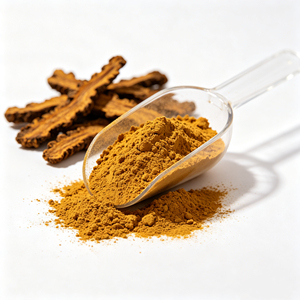
Berberine HCl 10:1 / 97% HPLC-DAD ≤ 5.0% Ethanol & Water Only Tablets, Enteric Softgels, Powders
Schisandra Extract
Schisandra chinensis
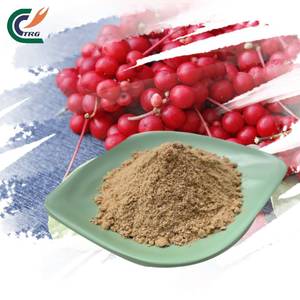
Schisandrins 2.0% - 9.0% HPLC-UV ≤ 5.0% Ethanol Residual < 0.5% Syrups, Adaptogen Blends, Gummies
Honeysuckle Extract
Lonicera japonica Thunb.
Chlorogenic Acid ≥ 5% - 25% HPLC ≤ 5.0% Water Extraction (Zero Organic) Effervescent, RTD Drinks, Sachets
Hawthorn Leaf & Berry
Crataegus pinnatifida
Total Flavonoids ≥ 10% - 20% UV-Vis / HPLC ≤ 5.0% Hydro-Ethanolic (Class 3) Cardio Tablets, Functional Powders
Purified Shilajit Extract
Asphaltum punjabianum
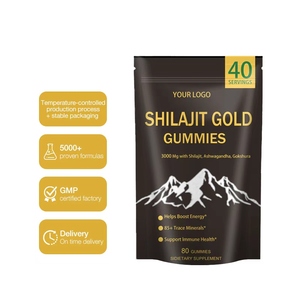
Fulvic Acid ≥ 50.0% Gravimetric / Titration ≤ 6.0% Water Extracted Pectin Gummies, Tonics, Capsules
Strategic Procurement Forecast

Future Procurement Trends in Herbal Supplement Ingredients (2025–2030)

Macro-economic supply challenges, global regulatory tightening, and increasing scrutiny around adulteration are fundamentally reshaping corporate procurement. Here is how advanced contract manufacturing organizations (CMOs) and brands are positioning their raw material procurement strategies.

DNA Barcoding & Botanical Species Integrity

Traditional non-specific UV/spectrophotometric tests are increasingly recognized as vulnerable to spike adulteration. Forward-thinking procurement teams require botanical verification through DNA meta-barcoding, high-performance thin-layer chromatography (HPTLC) fingerprinting, and isotope ratio mass spectrometry (IRMS) to confirm authentic geographic botanical origin and eradicate adulterant species substitution.

Green Solvent Engineering & Supercritical Fluid Tech

With the European Chemicals Agency (ECHA) and FDA enforcing stricter solvent thresholds, manufacturers are abandoning neurotoxic industrial solvents such as Hexane, Methanol, and Dichloromethane. The prevailing trend mandates subcritical water extraction, super-critical carbon dioxide (scCO2) technologies, and closed-circuit bio-ethanol recovery, ensuring non-detectable solvent residues and ultra-clean label consumer acceptance.

Proactive Index Hedging & Contracted Cultivation

Unpredictable climate oscillations and harvest anomalies have amplified raw plant market price volatility. Leading nutraceutical brands are abandoning spot-market sourcing in favor of multi-year, forward-contracted agricultural agreements with GMP exporters who run dedicated wildcrafting bases, guaranteeing yield volume, price stability, and verified Good Agricultural and Collection Practices (GACP).

Scientific Innovation Horizon

Emerging Product Development & Phytochemical Formulation Trends

Next-generation consumer expectations demand clinically validated functional outcomes, clean excipient formulations, and enhanced bioavailability architectures.

Micro-Encapsulation & Bioavailability Optimization

Hydrophobic bio-actives like Berberine from Coptis and Cycloastragenol from Astragalus face historical limitations in gastrointestinal permeability. Modern formulation trends utilize liposomal encapsulation, phytosome phospholipid complexes, and cyclodextrin inclusions. These technological enhancements achieve up to a 9-fold increase in plasma AUC without demanding toxic excipients.

Adaptogen Stacking & Adrenal-Mitochondrial Synergy

Single-ingredient formulas are rapidly transitioning to multi-tiered adaptogenic matrices. By integrating fulvic-bound Shilajit with adaptogenic cordycepin (Cordyceps) and ginsenosides (Panax Ginseng), formulators create simultaneous ATP upregulation via the Krebs cycle alongside hypothalamic-pituitary-adrenal (HPA) axis cortisol stabilization for sustained neuro-energetic homeostasis.

Functional Delivery Shift: Pectin Gummies & Effervescent Drinks

Pill fatigue among modern demographics has spurred a massive expansion into non-capsule delivery modes. Ingredients like Mullein Leaf extract, Honeysuckle Chlorogenic Acid, and Astragalus polysaccharides are specially processed with precise particle size distribution (80–120 mesh) and neutral pH solubilization to preserve functional matrix stability in gelatin-free pectin gummies and sparkling functional drinks.

Procurement Intelligence

Frequently Asked Questions on Botanical Ingredients Sourcing

Clear, authoritative answers directly addressing supply compliance, sample verification, international logistics, and analytical chemistry validation.

What does "CE Certified" mean for herbal ingredients?

For herbal raw materials exported to Europe, "CE Certified" alongside related declarations reflects full adherence to European Union health, food contact, environmental safety regulations (such as EC 178/2002 food safety law), and compliance with the EU Novel Foods catalog and the European Pharmacopoeia (Ph. Eur.) monographs for botanical preparations.

How are heavy metal and pesticide limits guaranteed per batch?

Every batch undergoes validated ICP-MS testing for heavy metals (Pb, Cd, As, Hg) calibrated to European Commission Regulation (EU) 2023/915. Multi-residue pesticide screening via LC-MS/MS and GC-MS/MS confirms complete absence or compliance below strict USP <561> and Ph. Eur. 2.8.13 limits before release.

Can you provide custom extraction ratios or carrier-free powders?

Yes. We offer fully custom manufacturing parameters including carrier-free (100% pure plant solids) spray-dried powders, or customized maltodextrin/dextrin carrier formulations designed for uniform mechanical flowability, direct capsule filling, or instant water-dispersible drink formats.

What is the standard procedure for lab testing sample evaluation?

We provide 50g–200g pilot evaluation samples from actual commercial manufacturing lots, shipped alongside a lot-specific Certificate of Analysis, analytical test methodology protocols, and Safety Data Sheets (SDS) to facilitate your in-house chemical verification before bulk PO execution.

How are international shipping and import compliance handled?

We offer air-express freight (DAP/DDP) and consolidated maritime shipping (FOB/CIF) to over 50 countries. Every consignment includes full export declarations, phytosanitary certificates, Certificates of Origin (COO), and compliant customs HS Code classifications to guarantee clean clearance.

What documentation accompanies every commercial export batch?

Each shipment includes an authentic Batch CoA, Allergen Declaration (EU Annex II compliant), GMO Statement, Non-Irradiation Certificate, Residual Solvent Declaration, BSE/TSE Free Statement, and Certificate of Packaging Migration Safety for seamless quality auditor approval.

Ready to Accelerate Your Ingredient Quality & Compliance?

Connect directly with our senior technical sourcing specialists. Receive custom assay quotations, batch-specific chromatograms, pilot validation samples, and full technical compliance dossiers within 24 business hours.