
Directly sourced from audited GMP & Kosher-certified production facilities. Batch-verified by HPLC, UV, and LC-MS to meet the regulatory rigor of US, UK, and European pharmacopeial monographs.
In the globalized functional food, dietary supplement, and pharmaceutical intermediate sectors, the demand for certified Kosher herbal extracts has evolved well beyond ethnic and religious niche dietary requirements. Sourcing executives and formulation scientists from North America, the United Kingdom, the European Union, and the Asia-Pacific region treat a recognized Kosher certification (such as Orthodox Union (OU), Star-K, OK, or KOF-K) as a primary proxy for rigorous ingredient traceability, exceptional hygiene protocols, and absolute purity verification.
China occupies an irreplaceable position within the global phytochemistry value chain, cultivating and refining upwards of 70% of the world's primary botanical raw materials. From native Panax ginseng harvesting in Jilin to extensive citrus flavonoid crystallization in Hunan and Sichuan, Chinese manufacturing infrastructure has undergone a massive modernization wave. However, procuring Kosher botanical extracts from China necessitates an in-depth understanding of both halachic compliance (Jewish dietary law) and the chemical engineering processes involved in industrial-scale solid-liquid extraction, resin adsorption, and chromatographic purification.
A true Kosher botanical manufacturing framework requires strict separation of equipment, rigorous monitoring of process processing aids (such as enzymes, activated carbon, and antifoaming agents), and thorough validation of extraction solvents. When solvents like ethanol are employed, they must derive strictly from grain or synthetic origins rather than non-Kosher viticulture by-products. As leading manufacturers and exporters based in China with extensive UK-led technical service desks, our manufacturing facilities integrate cGMP (Current Good Manufacturing Practice), ISO 22000, and certified Kosher supervision directly into standard operating procedures.
Nutraspect and our associated manufacturing bases operate as an integrated technical bridge between Chinese phytochemistry production and global pharmaceutical and nutraceutical brands. When enterprise procurement teams evaluate an overseas botanical supplier, regulatory delays are seldom caused by raw material shortages; they stem from incomplete technical dossiers, failure to satisfy elemental impurity thresholds, or ambiguous traceability.
Full annual and surprise on-site rabbinical inspection workflows. All processing vessels, spray-drying towers, and fluidized-bed granulators maintain validated Pareve status, preventing cross-contact with animal derivatives or unapproved fermentation matrices.
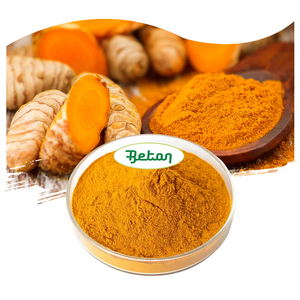
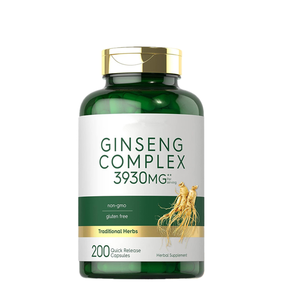
Every lot undergoes chromatography profiling (UHPLC, GC-MS/MS) to safeguard against economic adulteration. We quantify active marker compounds—such as withanolides in Ashwagandha, curcuminoids in Turmeric, and ginsenosides in Ginseng—with verified reference standards.
Unlike conventional brokers who conceal maltodextrin percentages, our technical datasheets disclose exact carrier ratios, native plant extract percentages, and moisture isotherms. Custom carrier-free grades and Kosher cyclodextrin complexes are matched to dosage forms.
The baseline analytical limits applied to all Kosher botanical extract export batches to the European Union, United Kingdom, and the United States:
| Analytical Parameter | Reference Methodology | USP / EP Strict Threshold | Nutraspect Verified Batch Norm |
|---|---|---|---|
| Assay & Phytochemical Identification | HPLC / UPLC / TLC-Densitometry | Positive identification against reference standard | Standardized 100% matched to marker claim |
| Heavy Metals (Pb, As, Cd, Hg) | ICP-MS (Inductively Coupled Plasma) | USP <2232> / EP 2.4.27 limits | Pb <0.5 ppm, As <0.5 ppm, Cd <0.1 ppm, Hg <0.05 ppm |
| Pesticide Residue Screen | GC-MS/MS & LC-MS/MS (Multi-residue) | USP <561> (70+ compound panel) | Non-detected / Fully compliant with EC 396/2005 |
| Residual Solvents | Headspace GC-FID | USP <467> Class 1, 2, and 3 | Class 1 None; Class 2/3 well below 100 ppm; Ethanol <500 ppm |
| Microbiological Bioburden | USP <61> & <62> Automated Plating | TAMC <10,000 CFU/g; TYMC <1,000 CFU/g | TAMC <1,000 CFU/g; Absence of E. coli, Salmonella, S. aureus |
| Aflatoxins & Mycotoxins | HPLC-FLD with Post-column Derivatization | Total Aflatoxins (B1, B2, G1, G2) <4 μg/kg | B1 <2.0 μg/kg, Ochratoxin A <3.0 μg/kg |
Strategic sourcing is rapidly transitioning from transactional spot-purchasing to integrated, multi-year supply chain resilience. As botanical extraction facilities in China implement industry 4.0 automation and green chemistry standards, global procurement directors must adapt to five major technological and regulatory shifts:
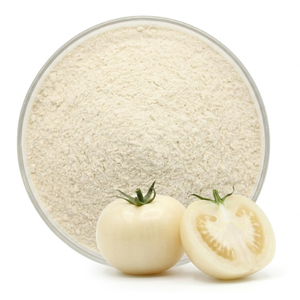
Volatile organic solvents face mounting regulatory scrutiny under European REACH standards and California Proposition 65. The botanical industry in China is investing heavily in supercritical CO2 and subcritical water extraction systems. For Kosher supply chains, this eliminates solvent origin ambiguities entirely: CO2 and water are inherently Pareve, leaving zero synthetic solvent residues while extracting non-polar botanicals like Curcuminoids, Tomato Lycopene, and Ginseng lipophilic fractions with unprecedented thermodynamic gentleness.
Hydrophobic herbal extracts—notably pure Curcumin 95% and citrus bioflavonoids such as Diosmetin—have historically suffered from low human oral bioavailability and formulation precipitation in beverages. The market is shifting from plain crystalline powders toward bio-enhanced forms. Using Food Grade Hydroxypropyl Beta Cyclodextrin (HPBCD), Chinese manufacturers encapsulate hydrophobic polyphenols inside a hydrophilic cyclodextrin cone. This confers complete water clarity for ready-to-drink (RTD) functional beverages while retaining full Kosher Pareve and Halal compliance without animal emulsifiers.
Formulators in Europe and North America increasingly demand raw materials that satisfy simultaneous market criteria: Non-GMO Project Verified, Kosher Certified, Halal Certified, and Vegan Registered. Manufacturing lines must undergo unified cleaning validation (CIP) to prevent cross-contamination between batches. Modern exporters in China now deploy dedicated closed-loop piping systems to ensure that a botanical powder synthesized for a European clinical supplement can be seamlessly utilized in Middle Eastern Halal or North American Kosher retail distributions without re-testing or supplementary audit documentation.
High-value extracts like Curcumin (CAS 458-37-7) and Diosmetin (CAS 520-34-3) are vulnerable to economic adulteration with synthetic, petroleum-derived petrochemical alternatives. In the future procurement horizon, top-tier buyers are demanding Carbon-14 (C14) radiocarbon dating analysis (ASTM-D6866). Genuine botanical extracts reflect contemporary atmospheric biogenic carbon, whereas synthetic chemicals display zero C14 activity. Chinese exporters operating with true E-E-A-T credentials routinely provide verified carbon isotope validation alongside standard HPLC purity certificates.
Procurement directors are systematically consolidating their Tier-1 vendor matrices, eliminating multi-layered middlemen trading companies in favor of direct manufacturer alliances that offer Western legal representation. Nutraspect's UK-anchored operational model provides brand owners with local contract certainty, transparent Incoterms (DDP, CIF, FOB), and audited warehouse replenishment options, neutralizing geopolitical tariff shifts and ocean freight volatility.
Successful formulation begins with selecting the correct physical state, particle size distribution, and dissolution kinetic profile. The functional food and supplement landscape has expanded beyond conventional compressed tablets into distinct consumer-centric formats:
Requires high tapped density (>0.50 g/mL) and superior powder flowability (angle of repose <35°). Standardized extracts like American Red Panax Ginseng and Curcumin 95% are engineered with specific micronization profiles (80–100 mesh) to avoid caking in high-speed encapsulators.
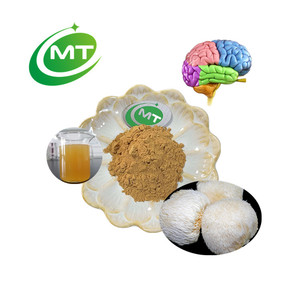
Pectin-based gummy matrices are inherently vegan and Pareve, replacing porcine gelatin. Extracts such as Lion's Mane Mushroom 30% Polysaccharides must be heat-stable up to 105°C during deposit and possess low hygroscopicity to maintain target gummy shelf-life.
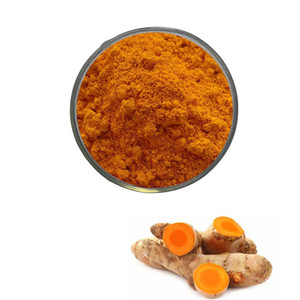
Demands zero sedimentation and immediate reconstitution. Our Water Soluble Turmeric Extract (10% Curcumin) dissolves instantly into ambient water without precipitation, providing vivid natural golden color and complete optical transparency under acidic pH conditions.
In-depth technical answers addressing regulatory oversight, rabbinical supervision, testing validation, and shipping logistics.
Connect directly with our technical procurement engineering desk. Request verified Certificates of Analysis, custom extract standardizations, evaluation samples, or schedule an on-site virtual factory audit.