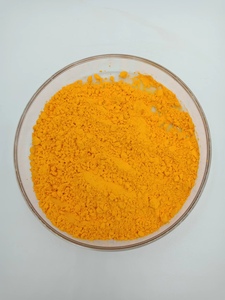

From our audited cGMP and ISO manufacturing lines, we engineer high-potency, standardized phytopharmaceutical extracts. Below is our featured industrial selection, formulated to achieve maximum bioavailability and assay consistency across demanding production pipelines.
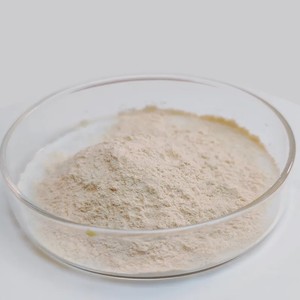
Combining modern Chinese extraction infrastructure with Western technical documentation discipline, we mitigate supply continuity and quality risks for contract manufacturers and global nutraceutical brands.
Extracts are manufactured under comprehensive cGMP, ISO9001, and ISO22000 quality systems. Every commercial batch fulfills heavy metal standards (<10ppm total, Pb <3ppm, Cd <1ppm, As <1ppm, Hg <0.1ppm), USP/EP pesticide residue clearance, and strict residual solvent cutoffs.
Prevent customs and QA quarantine delays. We provide an audit-ready dossier per production lot: HPLC/GC chromatograms, third-party heavy metal assay data, non-irradiation declarations, allergen sheets, GMO statements, and Halal / Kosher verification certificates.
With massive extraction capabilities across our high-altitude contract cultivation bases and active distribution networks reaching over 50 countries, we maintain strategic safety inventory. Enjoy reliable forward contracts, flexible Incoterms (FOB, CIF, DDP), and responsive batch execution.
Maca (*Lepidium meyenii Walp.*), an Andean brassicaceous biennial, has shifted from traditional consumption to a foundational adaptogenic and ergogenic nutraceutical. As commercial demand accelerates across dietary supplement, sports nutrition, and functional beverage categories, procurement teams require an empirical understanding of phytochemical constituents, extraction mechanics, and geographic terroir variations to protect product efficacy and supply chain economics.
While historically native to the Junín plateau in Peru, large-scale industrial cultivation of *Lepidium meyenii* has successfully expanded across high-altitude plateaus in China, notably the Yunnan (Lijiang/Shangri-La) and Xinjiang highland ecosystems. These regions, sitting at altitudes exceeding 3,000 to 3,800 meters with intense UV-B radiation, pronounced diurnal temperature fluctuations, and mineral-rich volcanic-lacustrine soils, replicate the stressors that stimulate biosynthesis of primary secondary metabolites: Macamides and Macaenes.
The standard industrial specification for Maca root extract relies on three distinct chemical families, which dictate functional claims and pharmacological efficacy:
| Extract Grade | Standardized Marker | Extraction Solvent | Physical Form & Mesh | Optimal Dosage Form |
|---|---|---|---|---|
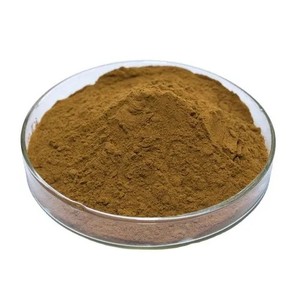
| Maca Native Ratio 4:1 / 10:1 | TLC / HPLC Profile Fingerprint | Hydroethanolic (30:70) | Fine Light Brown Powder, 80 Mesh | Direct compression, Hard-shell capsules |
| Standardized Macamide 0.6% | ≥ 0.60% Macamides (HPLC) | Ethanol Extraction (70:30) | Uniform Brown Powder, 80-100 Mesh | Premium adaptogen blends, Libido tablets |
| High-Potency Macamide 1.0%–2.5% | ≥ 1.0%–2.5% Total Macamides + Macaenes | Supercritical Fluid Extraction (SFE-CO2) | Granular Fine Powder / Waxy Paste | Softgels, Liposomal liquid matrices |
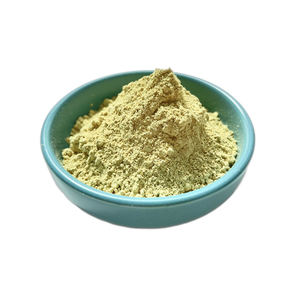
| Gelatinized Maca Powder | Soluble Starch > 98%, Native Polyphenols | Thermal-Pressure Extrusion (Water) | Off-White / Beige, 100-120 Mesh | RTD Beverages, Functional Protein Powders |
| Water-Soluble Maca Extract | Total Polysaccharides ≥ 30% (UV) | Aqueous Reflux + Spray Drying | Instant Soluble Powder, 100 Mesh | Electrolyte drinks, Effervescent formulas |
The manufacturing process determines the stability and bioavailability of finished formulas. Leading Chinese facilities utilize three predominant engineering configurations:
1. Multi-Stage Countercurrent Hydroethanolic Extraction: The primary commercial methodology for producing standardized 0.6% and 1.0% macamide extracts. Dried, sliced Maca hypocotyls are subjected to sequential 70% food-grade ethanol baths at 60–65°C. This preserves thermolabile alkylamides while stripping away heavy starches. The eluent is filtered, concentrated under vacuum below 50°C, and spray-dried utilizing sterile, closed-loop spray drying towers to yield free-flowing powders with low hygroscopicity.
2. Supercritical Fluid CO2 (SFE-CO2) Extraction: For pharmaceutical-grade, highly lipophilic fractions (concentrations up to 2.5%–5.0% macamides), SFE-CO2 represents the apex of extraction technology. Operating at pressures between 25 and 35 MPa and temperatures of 35–45°C with ethanol as an organic co-solvent, this zero-residue process prevents thermal degradation and eliminates solvent residues. SFE-CO2 extracts are preferred for EU and North American clean-label products.
3. Thermal Extrusion Gelatinization: Raw Maca contains roughly 60–70% starches, which cause GI distress and poor dispersibility in functional drinks. Gelatinization applies controlled heat and high pressure through industrial twin-screw extruders to rupture long-chain amylose and amylopectin matrices without degrading glucosinolates. The resulting powder achieves near 100% water solubility and improved intestinal absorption.
Procurement executives must navigate structural supply chain realignments, stricter analytical validation, and emerging consumer expectations when negotiating annual contracts.
Global regulators and tier-1 supplement manufacturers are phasing out generic "10:1" and "20:1" extraction ratio declarations. Ratios without defined HPLC/GC fingerprints frequently disguise maltodextrin carrier adulteration. The market is shifting decisively toward titrated macamide fractions (≥0.6% and ≥1.0%) with verified baseline peaks.
Maca root extract is increasingly co-formulated with synergistic nootropics and adaptogens. Modern male health, energy, and hormonal support formulations incorporate Curcumin 95% to manage inflammation, Lion's Mane for neurocognitive enhancement, and Bacopa 20% for focus, driving bulk demand for multi-ingredient single-source suppliers.
Because root tubers absorb soil contaminants, wild and uncontrolled crops face frequent rejections for high lead (Pb) and cadmium (Cd) levels. Modern buyers mandate contract-farmed botanical materials grown in tested sub-alpine terrains with audited pesticide databases compliant with Regulation (EC) No 396/2005.
As commercial competition intensifies, supply chain fraud poses a recurring challenge. Low-grade suppliers often substitute exhausted root marc, spiked industrial brassica powders, or excessive carrier agents (over 50% maltodextrin). High-potency extracts must pass stringent identity and purity protocols before release into commercial streams:
We utilize High-Performance Liquid Chromatography (HPLC) paired with Diode Array Detection (DAD) and Mass Spectrometry (LC-MS) to separate and quantify specific macamides. High-Performance Thin-Layer Chromatography (HPTLC) establishes the botanical fingerprint against USP reference standards.
Heavy metal quantification is executed via Inductively Coupled Plasma Mass Spectrometry (ICP-MS) with parts-per-billion (ppb) sensitivity: Lead (Pb ≤ 2.0 mg/kg), Arsenic (As ≤ 1.0 mg/kg), Cadmium (Cd ≤ 0.5 mg/kg), and Mercury (Hg ≤ 0.1 mg/kg).
Aerobic plate counts (≤1,000 CFU/g), yeast and molds (≤100 CFU/g), with non-detectable Salmonella, E. coli, and Staphylococcus aureus. We employ steam sterilization; products are 100% Ethylene Oxide (ETO) and irradiation-free.
Common questions answered by our phytochemists and international trade specialists to streamline raw material qualification.
While *Lepidium meyenii* originated in Peru, the Yunnan (Hengduan Mountains) and Xinjiang sub-alpine plateaus share equivalent climatic conditions: altitudes over 3,200 meters, thin oxygen atmospheres, intense solar UV-B radiation, and sharp day-night temperature swings. These identical environmental triggers result in matching macamide, macaene, and glucosinolate profiles. China offers more advanced, automated GMP extraction facilities, integrated logistics networks, consistent year-round supply, and significantly lower price volatility compared to the Peruvian market.
We quantify Macamides via reverse-phase High-Performance Liquid Chromatography (RP-HPLC) coupled with UV/DAD detectors at 210 nm, or through GC-MS for detailed isomer separation. Reference standards for N-benzylhexadecanamide and N-benzyl-(9Z,12Z)-octadecadienamide verify target peaks against internal validation curves. We provide transparent chromatogram runs alongside each Certificate of Analysis (CoA).
Raw Maca powder contains complex starch molecules that can trigger digestion issues, stomach bloating, and enzyme inhibition. Gelatinization uses thermal pressure extrusion to break down starch polymers into simple, easily digested carbohydrates, improving water solubility to over 98% and concentrating active metabolites without harming heat-stable macamides.
Every delivery includes a batch-specific Certificate of Analysis (CoA), Manufacturing Flow Chart, Safety Data Sheet (SDS/MSDS), Certificate of Origin (COO), and formal compliance declarations confirming non-GMO, gluten-free, BSE/TSE-free, non-irradiation, and allergen-free status. We also provide test reports for pesticide residues (>400 screen) and heavy metal compliance.
Our standard MOQ for stock extracts is 25 kg, packaged in tamper-evident fiber drums lined with dual food-grade polyethylene bags. For pilot runs, formulation testing, or custom extraction ratios, trial orders starting at 1 kg to 5 kg are available upon review with our technical team.
Yes. While standard spray-dried botanical extracts typically utilize food-grade maltodextrin (5–10%) to stabilize hygroscopic particles, we can formulate carrier-free grades or use alternative clean-label carriers such as organic acacia gum, organic rice flour, or tapioca maltodextrin depending on formulation requirements.
Root botanicals naturally accumulate soil minerals. We manage this through careful field selection, testing agricultural soils prior to sowing, and using ion-exchange resin columns alongside membrane separation during extraction to strip out divalent cations. Final lots consistently beat USP, European Pharmacopoeia, and California Proposition 65 limits.
Maca root extract powder should be stored in original sealed drums in a cool (≤25°C), dry area protected from heat, moisture, and direct UV light. Under optimal warehouse conditions, the retest date is 24 months from the manufacturing date, confirmed through on-going accelerated stability testing.
Our water-soluble Maca extract grade undergoes multi-stage filtration, clarification, and specialized spray drying to create a fully dispersible powder that dissolves clear in aqueous solutions without gritty sedimentation, making it ideal for RTD beverages, functional shots, and sachet drink mixes.
Our manufacturing sites operate in full compliance with US FDA 21 CFR Part 111 (Dietary Supplements) and Part 117 (FSMA cGMP). In the European Union, Maca extracts enjoy recognized food ingredient status based on historical consumption before 1997. We also support Health Canada Natural Product Number (NPN) applications with comprehensive technical dossiers.
Connect with our technical team for immediate access to lot-specific HPLC chromatograms, complete specification dossiers, sample evaluations (100g complimentary for qualified manufacturers), and competitive annual tier pricing.