
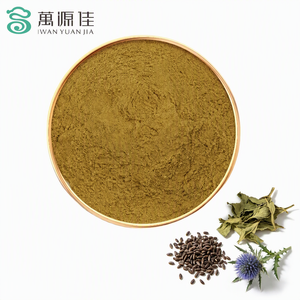
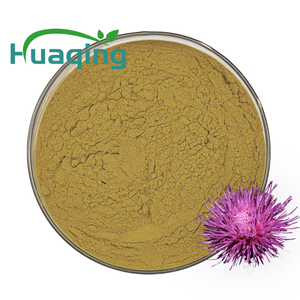
As an established authority among China top milk thistle extract manufacturers, our production lines supply pharmaceutical-grade raw materials and turnkey finished dosage forms conforming to USP, EP, and ChP standards. Each batch undergoes rigorous third-party assay verification for silymarin, silybin, and isosilybin isomers.
Procuring botanical extracts in a volatile global supply environment requires verifiable reliability, documented safety, and transparent supply routes. Bridging source-factory extraction efficiency in China with UK-led international customer desk governance, our enterprise provides end-to-end assurance from seed germination to landed container clearance.
Cross-border pharmaceutical and botanical procurement often stumbles on regulatory red tape, misaligned testing criteria, and opaque lead times. Our UK management desk operates on GMT working hours, coordinating immediate technical file clarifications, customs documentation, and landed stock management across Europe, North America, and the APAC region.
Capable of standardizing isolated silybin up to 99%, or balancing natural complex ratios of silybin, isosilybin, silychristin, and silydianin per brand requirements.
We eliminate "UV inflation." Quotes clearly specify whether assay guarantees rely on UV-Vis spectrophotometry or validated HPLC chromatography.
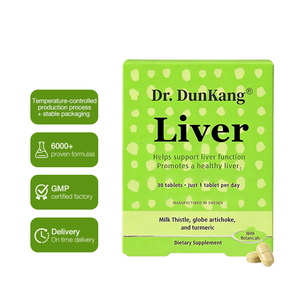
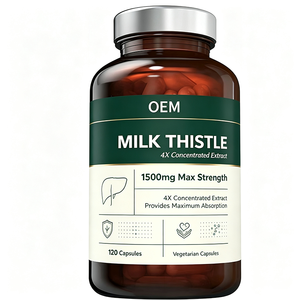
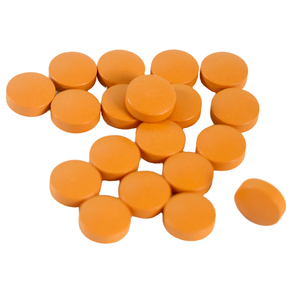
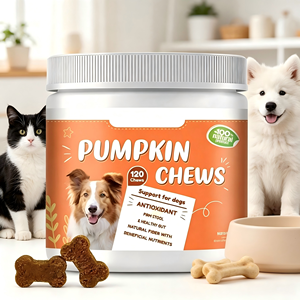
From bulk powder barrels to contract-manufactured tablets, softgels, vegetarian HPMC capsules, and functional pet chews with bespoke flavor profiles.
Long-term fixed contracts and pre-crop hedging protect procurement managers from extreme market swings driven by regional weather shifts.
For procurement directors, scientific affairs officers, and QA directors, assessing milk thistle extract suppliers requires understanding complex flavonolignan structures. Below is an objective analysis of testing discrepancies, active components, and contaminant thresholds.
A common point of friction in B2B transactions is the divergence between Ultraviolet-Visible Spectrophotometry (UV) and High-Performance Liquid Chromatography (HPLC). UV testing measures generic absorbance near 288 nm, picking up not only silymarin isomers but also extraneous polyphenols, oxidized matrix compounds, and potential adulterants. Consequently, a traditional "Silymarin 80% by UV" extract often yields only 45% to 55% true silymarin when subjected to validated HPLC chromatography.
Milk thistle's biological efficacy stems from a distinct cluster of flavonolignans formed via oxidative coupling of taxifolin with coniferyl alcohol. Standard European Pharmacopoeia (EP) and United States Pharmacopeia (USP) monographs quantify six key active markers: Silychristin, Silydianin, Silybin A, Silybin B, Isosilybin A, and Isosilybin B. Pure pharmaceutical grades prioritize silybin (the most pharmacologically active component for hepatic cell membrane stabilization).
Milk thistle seeds contain 20% to 30% fixed lipids. Proper manufacturing requires thorough defatting before extraction. While legacy factories previously relied on ethyl acetate or high-residual hydrocarbon mixtures, clean manufacturing utilizes hexane-free mechanical cold pressing followed by supercritical CO2 or controlled ethanol/water extraction. This ensures residual solvents stay well under EP/USP Class 3 limits (<5000 ppm for ethanol; <5000 ppm for acetone).
| Commercial Grade | Extraction Solvent | Assay Method | Typical Flavonolignan Marker Profile | Primary Finished Applications |
|---|---|---|---|---|
| EP / USP Grade Powder | Acetone / Water or Ethanol / Water | HPLC (Monograph) | Silymarin ≥30.0%–65.0% (Sum of 6 Isomers); Silybin (A+B) ≥31.0% | Pharmaceutical Rx, OTC Liver Therapeutics, High-end Clinical Supplements |
| Standard Nutraceutical 80% | Ethanol / Water | UV-Vis (Abs 288 nm) | Silymarin ≥80% by UV (Corresponds to ~50% total isomers by HPLC) | Dietary supplement capsules, multi-ingredient herbal detox blends |
| Isolated Silybin 90%+ | Ethanol Fractional Crystallization | HPLC | Silybin A + B ≥90.0% to 98.0%; Taxifolin <1.0% | Phytosome synthesis, oncology adjunctive research, premium injectable research |
| Water-Dispersible Grade | Ethanol / Complexation Carrier | HPLC | Silymarin 20%–40% with customized maltodextrin/lecithin carrier | Functional ready-to-drink (RTD) beverages, effervescent powders, stick packs |
| Veterinary Feed / Chew Grade | Aqueous / Hydro-ethanolic | UV or HPLC | Silymarin 40%–60% UV; optimized aroma, free of bitter taxifolin spikes | Canine/feline hepatic soft chews, livestock feed additives, aquaculture health |
*Note: Specifications shown represent typical commercial releases. Custom particle sizing (80 to 200 mesh), customized tap densities, and low-PA (pyrrolizidine alkaloid) validated grades are available on demand.
Global supply chains for botanical extracts are shifting rapidly under intensifying regulatory scrutiny, climate volatility, and formulation technological advancements. Procurement teams navigating the 2025–2030 procurement cycles must anticipate these critical structural shifts.
Cross-contamination of milk thistle harvests with weeds such as Senecio species has triggered strict European Union Commission Regulations (Regulation EU 2020/2040) setting maximum limits on Pyrrolizidine Alkaloids. China top milk thistle extract manufacturers must invest heavily in mechanical seed screening, optical sorting, and sensitive LC-MS/MS testing routines to ensure levels stay reliably below parts-per-billion (ppb) thresholds.
Standard silymarin suffers from poor water solubility (less than 50 μg/mL) and low oral bioavailability (typically 20% to 50% gastrointestinal absorption). Emerging procurement demand is transitioning from cheap crude powders to bioavailability-enhanced systems: Silymarin-Phospholipid Phytosomes, cyclodextrin inclusion complexes, and self-microemulsifying drug delivery systems (SMEDDS) that amplify biological uptake up to 4.6-fold.
Severe rainfall fluctuations in Northern China cultivation belts have highlighted the risks of spot-market raw seed buying. Global brand owners are actively shifting toward 3-year supply contracts backed by dedicated farm acreages with drip irrigation, zero-pesticide organic management, and complete farm-to-factory lot tracking.
Manufacturing excellence no longer relies solely on classic batch boiling. China's top tier manufacturers deploy cutting-edge processing engineering to deliver superior batch consistency, higher bulk density, and zero chemical degradation.
By replacing petrochemical defatting hydrocarbons with supercritical carbon dioxide (scCO2), processing facilities efficiently isolate virgin milk thistle seed oil (rich in natural linoleic and oleic fatty acids) while leaving an unheated, pristine seed cake. This residue is then gently extracted for flavonolignans without thermal degradation of sensitive silybin isomers.
Ultrasound-assisted extraction (UAE) coupled with automated countercurrent columns breaks plant cell wall vacuoles cavitationally. This achieves higher extraction yields within minutes rather than hours, reducing extraction temperatures below 45°C and preventing the thermal oxidation of silychristin into dark, degraded polymer impurities.
Silymarin powder possesses an intense natural astringency and low compressibility, presenting significant challenges for high-speed tablet presses. Advanced fluid-bed spray granulation blends pure silymarin with neutral polysaccharides, producing dense, free-flowing, dust-free granules engineered for direct compression without capping or lamination.
Clear, documented technical answers addressing certification, solvent parameters, assay methods, and supply timelines to expedite your vendor qualification audit.
UV spectrophotometry measures total non-specific absorbance, which routinely yields an 80% value by including non-silybin polyphenolic compounds. HPLC provides precise chromatographic resolution of the specific six flavonolignan isomers. When evaluating quotes, clarify whether the requirement calls for 80% UV (standard commercial grade) or an HPLC monograph grade (which typically targets 30% to 65% total silymarin by HPLC). We supply both and document the analytical test method explicitly on every Certificate of Analysis.
We strictly adhere to EP 5.4 and USP <467> Class 3 limits. We do not use Class 1 (e.g., benzene, carbon tetrachloride) or Class 2 solvents. Our standard ethanol or acetone extracts maintain residual solvent levels well under 3,000 ppm (significantly stricter than the pharmacopeial 5,000 ppm ceiling), and each lot is validated using headspace gas chromatography (GC-HS).
In compliance with EU Regulation 2020/2040, we enforce raw material weed seed control at harvest, followed by multi-stage optical color sorters and gravitational air tables at the seed cleaning stage. Finished lots destined for European supplement makers undergo LC-MS/MS testing ensuring total PAs remain well below the 400 μg/kg ceiling for botanical food supplements.
Yes. Our processing lines hold current Kosher and Halal annual certifications. Furthermore, we maintain specialized certified-organic milk thistle supply chains (EU & USDA NOP organic certified) grown on audited agricultural parcels without synthetic fertilizers, synthetic herbicides, or pesticides.
For catalog raw material powders (e.g., Silymarin 80% UV, Silybin 90% HPLC), standard stock MOQ is 25 kg (one fiber drum), available for immediate air dispatch within 3–5 working days or ocean container freight within 14 days. For customized OEM tablet or capsule contract packaging, typical batch MOQs begin at 200,000 to 500,000 units with a 4 to 6-week turnaround.
Our regulatory affairs team supplies a complete documentation package: Batch CoA, Allergen Statement, Non-GMO Declaration, BSE/TSE-Free Certificate, Safety Data Sheet (SDS), Flow Chart of Extraction, Origin Statement, and Heavy Metal / Microbiological third-party test data (ICP-MS).
Connect directly with our UK and factory sourcing specialists. Whether you need 25kg of USP-grade silymarin powder for formula trials or full container-load contract manufacturing for global retail shelves, our QA desk responds within one business day.