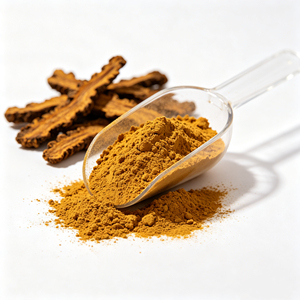

Source pharmaceutical-grade botanical extracts processed under cGMP and ISO guidelines. Fully supported by batch-specific Certificates of Analysis (CoA), complete traceability records, and rigorous contaminant screenings.
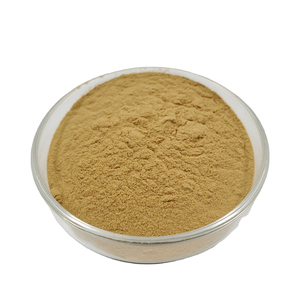
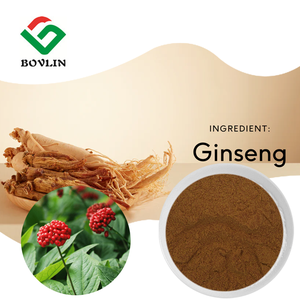
Ashwagandha (Withania somnifera) represents one of the most commercially critical botanical adaptogens in modern dietary supplement, functional food, and nootropic applications. However, formulating clinical-strength, stable consumer products requires rigorous technical control over active compound standardisation, chemical profiling, and solvent isolation mechanics. Custom OEM manufacturing demands far greater sophistication than basic extraction ratios (e.g., 10:1 or 20:1); it demands uniform, batch-to-batch chromatographic reproducibility of secondary metabolites.
The principal bioactives responsible for modulating the hypothalamic-pituitary-adrenal (HPA) axis are steroidal lactones, collectively classified as withanolides (prominently Withaferin A, Withanolide A, Withanolide B, and Withanoside IV-VI). As an OEM extract factory partner, we operate specialized extraction trains that isolate actives exclusively from pure, dried roots, strictly avoiding aerial or leaf adulteration unless explicitly mandated by client formulation architectures.
To assure regulatory approval across North American (US FDA DSHEA), European (EFSA Novel Food & Traditional Herbal Medicines frameworks), and British (MHRA) jurisdictions, analytical standardisation must be validated via High-Performance Liquid Chromatography with Photodiode Array Detection (HPLC-DAD) or Ultra-High Performance Liquid Chromatography-Tandem Mass Spectrometry (UHPLC-MS/MS). While traditional gravimetric or spectrophotometric (UV) assays have historically been applied in bulk commodity trading, they consistently overestimate withanolide concentrations by co-detecting non-specific phytosterols. Our manufacturing processes utilize selective, gradient reversed-phase chromatography to verify precise marker thresholds from 1.5% to 10% total withanolides with quantified limits on Withaferin A cytotoxic fractions.
| Standard Grade | Active Marker Compound | Analytical Assay | Solvent System | Optimal Formulation Carrier |
|---|---|---|---|---|
| Therapeutic Standard | 2.5% - 5.0% Total Withanolides | HPLC-DAD (USP/Ph. Eur. Monograph) | Aqueous-Ethanolic (70:30) | Hard Gelatin & HPMC Two-Piece Capsules |
| High-Concentration Root | 7.0% - 10.0% Withanolides | HPLC-DAD Column C18 | Supercritical Fluid CO2 / Hydroethanolic | Direct Compression Tablets & Micro-Pellets |
| Full-Spectrum Water Soluble | 1.5% - 2.5% Withanolides + Saponins | HPLC Gradient Elution | 100% Deionized Purified Water | RTD Functional Beverages, Shots & Sachets |
| Organic Certified Grade | ≥ 5.0% Withanolides (NOP/EU Organic) | UHPLC-MS / HPLC | Organic Certified Cane Ethanol System | Clean-Label Botanical Tinctures & Gummies |
A major formulation issue encountered by contract packaging facilities is the natural hygroscopic behavior and intense bitterness of root extracts. Through advanced OEM microencapsulation, spray-bed agglomeration, and targeted carrier balancing (using organic gum acacia or non-GMO maltodextrin), we optimize powder flowability, bulk density (0.40 - 0.60 g/mL), and particle mesh distribution (customised from 80-mesh to 200-mesh ultrafine powders), guaranteeing seamless high-speed encapsulator operation and uniform blend dispersion.
Global nutra-procurement executives are transitioning from spot-market trading to vertically integrated contract partnerships. Aligning your OEM supply chain with emerging market dynamics ensures price stability, supply resilience, and consumer trust.
Supply chain transparency has shifted from voluntary value-add to mandatory regulatory screening. Modern brands face reputational hazards from adulterated biomass or aerial part substitution. Procurement protocols now mandate orthogonal testing: genomic identification via Next-Generation Sequencing (NGS) DNA barcoding coupled with high-resolution chromatographic metabolite profiling to conclusively verify pure Withania somnifera root lineage.
Industrial demand is rapidly transitioning toward zero-toxic-solvent infrastructure. OEM facilities utilizing clean water extraction, supercritical fluid CO2 fractionation, and enzymatic-assisted processing yield cleaner active isolates while complying with stringent European Commission limits on residual petrochemical solvents (such as hexane, methanol, and ethyl acetate). ESG transparency across sustainable Indian cultivation is also directly impacting multinational procurement audits.
While capsules historically dominated adaptogen consumption, global markets are seeing compound annual growth exceeding 14% in alternative delivery matrices. Sourcing strategies are prioritizing deodorized, bitterness-masked, water-soluble grades designed specifically to resist thermal degradation during gummy starch-molding and maintain clarity without flocculation in functional carbonated beverages and RTD wellness formulations.
Discover how pharmaceutical extraction standards are driving the next generation of multifunctional dietary supplements and clinical nutraceutical compounds.
Lipophilic bioactive structures such as withanolides often present bioavailability thresholds in human gastrointestinal absorption. Advanced OEM facilities are applying liposomal encapsulation technology utilizing non-GMO sunflower phospholipids and SNEDDS (Self-Nanoemulsifying Drug Delivery Systems). These architectures shield actives from gastric acid degradations, facilitating significantly increased intestinal uptake and enabling brands to justify clinical lower-dose product claims.
Consumer demand is moving beyond single-ingredient remedies toward multi-pathway botanical formulations. OEM clients increasingly request custom coprocessed agglomerations combining Ashwagandha Root with complementary adaptogens and nootropics—such as Panax Ginseng, Bacopa Monnieri, Rhodiola Rosea, and L-Theanine—producing unified pre-blends that streamline dry-blending QA procedures at contract manufacturing facilities.
Global regulatory oversight has intensified scrutiny around cytotoxic steroid lactones, specifically Withaferin A, when formulated for long-term daily health maintenance. Pioneering OEM factories utilize column-adsorption resin chromatography and differential crystallization methods to calibrate custom metabolite profiles, maximizing beneficial neuro-supportive Withanolide A concentrations while eliminating cytotoxic constituents below 0.05%.
As a specialized botanical extraction enterprise, our operations eliminate supply intermediaries, deliver batch documentation, and provide complete contract manufacturing flexibility.
Our extraction facilities operate strictly within certified Good Manufacturing Practices (cGMP) and ISO quality frameworks. Facilities maintain ongoing third-party audits, cleanroom class classifications, and automated environmental parameters.
No lot is dispatched without our comprehensive QA approval documentation. Every single consignment includes validated HPLC assay testing, heavy metals screening (Pb, As, Cd, Hg via ICP-MS), residual solvent analysis (GC-MS), and micro-pathogen clearance.
We supply verified documentation supporting export to more than 50 countries across Europe, North America, the Middle East, and Asia-Pacific. We provide Halal, Kosher, Non-GMO, BSE/TSE-Free, and Allergen declarations tailored to regional customs enforcement.
Beyond raw powder synthesis, our manufacturing capabilities extend to toll processing, customized mesh sizing, roller compaction dry granulation, softgel suspension base preparation, and turnkey capsule packaging with private label bottling.
Direct technical answers addressing validation protocols, lead times, regulatory compliance, and formulation specifications for procurement managers and quality engineers.
Our analytical laboratories validate withanolide concentrations using validated reverse-phase High-Performance Liquid Chromatography with Photodiode Array Detection (RP-HPLC-DAD) in strict accordance with the USP and European Pharmacopoeia monographs. We discourage relying solely on spectrophotometric (UV) assays because non-specific steroidal components and polyphenols cross-absorb, artificially inflating results by 20% to 40%. Our CoAs delineate quantified percentages of individual reference standards, specifically Withanolide A, Withaferin A, and Withanoside IV.
Yes. Every batch is rigorously tested by accredited third-party ISO 17025 laboratories to confirm strict adherence to Regulation (EC) No 396/2005 (Pesticide Residues, screening for over 450 compounds) and Regulation (EC) No 1881/2006 (Contaminants). ICP-MS instrumentation verifies heavy metal levels well below regional enforcement thresholds: Lead (Pb) < 1.0 mg/kg, Cadmium (Cd) < 0.5 mg/kg, Mercury (Hg) < 0.1 mg/kg, and Arsenic (As) < 1.0 mg/kg. Complete contaminant sheets are provided with every batch file.
For standard in-stock inventory grades (such as Ashwagandha Root 2.5% and 5.0% HPLC), our MOQ starts at 25 kg (industry-standard fiber drum with double PE liners). For custom-engineered OEM batches—such as specific particle micronization below 200 mesh, customized low-withaferin formulations, or unique water-dispersible carrier adjustments—our production line MOQ ranges between 100 kg and 500 kg depending on extraction train mechanics and batch yield calculations.
Beyond raw botanical material supply, our contract manufacturing services provide comprehensive OEM turnkey manufacturing. We offer precision custom capsule formulation (gelatin and vegetarian pullulan/HPMC), high-shear wet and dry tablet granulation, automated blister packaging, HDPE/PET bottling, full labeling design compliance, and nitrogen-flushed sachet packaging for drink mixes.
We supply analytical evaluation samples (50g to 200g) alongside complete documentation packages (CoA, Method of Analysis, MSDS, Nutritional Profile, and Flow Chart) for internal lab qualification before commercial contracts are formalized. All shipments are managed via established global freight networks (DAP, CIF, or FOB terms), complete with temperature-controlled air freight or palletized sea freight logistics.
Initiate direct communication with our technical sales and regulatory documentation desk. Receive rapid responses regarding raw material availability, custom standardization specs, and batch sample dispatch within 24 hours.
Inquire Now