
Standardized Commercial Portfolio
High-Purity Phytochemical Extracts & Active Ingredients
Engineered for high bioavailability, exceptional batch-to-batch chemical stability, and complete analytical compliance with USP, Ph. Eur., and FCC pharmacopeial benchmarks.
Quality by Design (QbD)
Enterprise Advantages: Pharmaceutical Integrity in Bulk Botanical Manufacturing
Procuring raw phytochemical extracts requires an unyielding approach to authenticity, standardized active isomer profiles, and rigorous contaminant limits.
As an established global supplier and custom OEM partner backed by a dedicated UK technical desk and audited manufacturing facilities, our organization eliminates the systemic risks inherent in botanical supply chains. Contract manufacturers and brand owners frequently struggle with batch-to-batch variation, unvalidated carrier blends, and trace chemical impurities. We engineer certainty into procurement through full-chain traceability from wildcrafted or farm-cultivated biomass to finished, standardized crystalline powder.
Stringent cGMP & Clean Extraction
Extracts are refined within state-of-the-art facilities compliant with US FDA 21 CFR Part 111, cGMP, and ISO 9001/22000 systems. We employ supercritical carbon dioxide (sCO2), low-temperature countercurrent hydroethanolic extraction, and vacuum thin-film evaporation to preserve heat-sensitive botanical bioactives without chemical degradation.
Standardized Marker Precision
We do not rely on crude native ratios alone. Every batch guarantees specified marker compound content—from 80% Ginsenosides via HPLC to 90% Silybin fractions and precise 40% L-Theanine enantiomer purities. Validated chromatography ensures that your formulations deliver consistent clinical efficacy.
Complete Regulatory Dossiers
Every commercial batch is accompanied by comprehensive release documentation: Batch-specific Certificate of Analysis (CoA), SDS (Safety Data Sheet), non-GMO statements, BSE/TSE statements, California Proposition 65 verification, allergen manifests, and verified testing data for heavy metals, pesticides, and residual solvents.
Custom Physical Particle Engineering
From microencapsulation and liposomal carrier complexes to granular formulations optimized for high-speed direct compression tableting, we tailor bulk density, tapped density, water dispersibility, and mesh sizes (from 60 mesh to micronized 200 mesh) to resolve encapsulation flowability bottlenecks.
Global Verified Logistics Hubs
Headquartered with UK-managed customer support and international distribution channels serving over 50 countries, we maintain strict cold-chain and moisture-barrier packaging. Predictable lead times, flexible Incoterms (FOB, CIF, DDP), and streamlined customs documentation eliminate transit delays.
Halal, Kosher & Clean-Label Certified
Our ingredients serve international dietary mandates with active religious certifications (Halal, Kosher) and organic accreditations. We enforce strict absence of toxic organic solvents (Class 1 and Class 2 per USP <467>), ensuring zero unlisted adulterants or petrochemical residues.
Quality Control Framework
Analytical Standard Matrix & Pharmacopeial Release Profile
A reference architecture of our core technical testing parameters applied prior to wholesale shipment release.
| Active Extract Compound | Target Marker / Active Fraction | Primary Assay Method | Heavy Metal Max Limit (ICP-MS) | Standard Release Documentation |
|---|---|---|---|---|
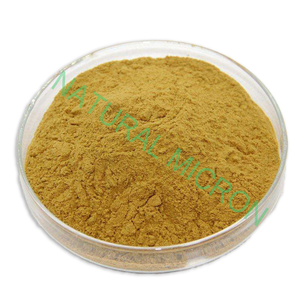
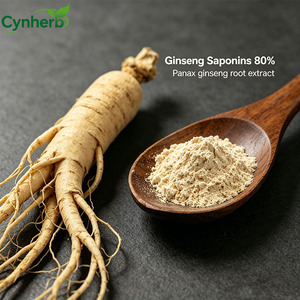
| Panax Ginseng Extract | Ginsenosides Rb1, Rb2, Rc, Rd, Re, Rg1 ≥ 80% | HPLC-DAD / UV-Vis | Pb < 0.5 ppm, As < 0.5 ppm, Cd < 0.2 ppm | CoA + HPLC Spectrum + Non-Irradiation |
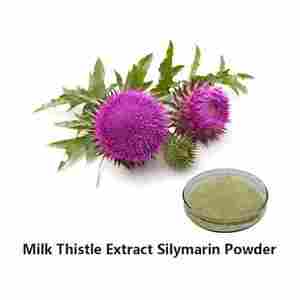
| Milk Thistle (Silymarin) | Silybin (A+B) ≥ 90% / Silymarin 80% | HPLC / Spectrophotometric | Pb < 0.5 ppm, As < 0.5 ppm, Hg < 0.1 ppm | USP <467> Solvents + Pesticide Screen |
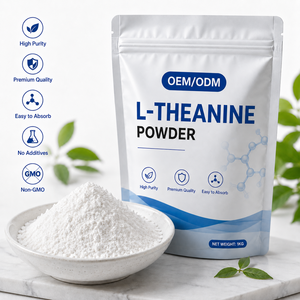
| Green Tea L-Theanine | γ-glutamylethylamide ≥ 40.0% - 98.0% | Chiral HPLC (Enantiomeric purity) | Total Heavy Metals < 5 ppm | Chiral HPLC + Allergen + TSE/BSE |
| Anemarrhena Asphodeloides | Timosaponin A-III ≥ 1.0% - 10.0% / Sarsasapogenin | HPLC-ELSD / LC-MS | Total Heavy Metals < 10 ppm | Cosmetic / Food Grade Technical File |
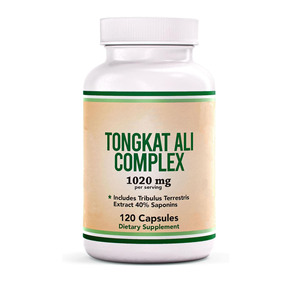
| Tongkat Ali (Eurycoma longifolia) | Eurycomanone 0.5% to 5.0% / Glycosaponin 40% | Reverse-Phase HPLC | Pb < 1.0 ppm, As < 1.0 ppm | ID TLC / DNA Barcoding Verified |
| Watermelon Seed Extract | Standard Ratio (10:1, 20:1), Citrulline, Zinc | Spectrophotometry / Titration | Prop 65 Compliant Limits | Microbiology Complete (BAM USP <2021>) |
Engineering Frontiers
Technological Innovations Shaping Phytochemical Manufacturing
How cutting-edge separation chemistry, green processing, and nano-stabilization are redefining the functional botanical industry.
1. The Paradigm Shift to Green Extraction & Supercritical Fluid Carbon Dioxide (sCO2)
Traditional solvent-based extractions utilizing hexane, chlorinated hydrocarbons, or excessive methanol fractions are facing increasing regulatory scrutiny under European REACH directives and California Proposition 65. The botanical manufacturing frontier has migrated decisively toward Supercritical Fluid Extraction (SFE-CO2) and Subcritical Water Extraction (SWE).
Carbon dioxide in its supercritical state (above 31.1°C and 73.9 bar) behaves simultaneously with gas-like diffusivity and liquid-like solvent power. By modulating pressure and temperature vectors, our chemical engineers selectively fractionate non-polar lipophilic phytonutrients (such as withanolides, saw palmetto sterols, and silybin fractions) without thermal breakdown. Because CO2 reverts instantly to an inert gas upon depressurization, the resulting bulk extracts are 100% free of hazardous residual solvents, ensuring a pristine clean-label ingredient profile for functional food and wellness formulations.
Advanced Ultrasonic & Microwave-Assisted Extraction (UAE / MAE)
For water-soluble saponins and phenolic compounds, high-frequency acoustic cavitation generates localized micro-jets that disrupt lignocellulosic plant cell walls. This reduces processing times from 12 hours to less than 45 minutes, dramatically cutting energy consumption while preventing the oxidation of delicate flavanols and polyphenols.
Molecular Distillation & Membrane Nanofiltration
To isolate high-potency molecules—such as pure Ginsenoside monomers or specific diterpene glycosides—we employ polyethersulfone (PES) ultrafiltration membranes and short-path wiped-film molecular distillation. Operating at vacuums under 0.001 mbar, these systems separate active fractions based on molecular mass without exposing botanicals to degradation thresholds.
2. Bioavailability Optimization: Overcoming the Phytochemical Permeability Barrier
The most persistent critique directed at natural phytochemical extracts by clinical researchers is poor in vivo oral bioavailability. Hydrophobic polyphenols, curcuminoids, and pentacyclic triterpenes typically suffer from low aqueous solubility in gastric fluids, extensive hepatic first-pass glucuronidation, and minimal enterocyte absorption.
Modern custom OEM manufacturing now addresses this challenge at the molecular engineering level:
Liposomal Entrapment & Phospholipid Complexes
By complexing active botanical molecules with non-GMO sunflower or soy phosphatidylcholine (forming phytosomes), the active compound becomes embedded within an amphiphilic matrix. This biomimetic structure passes seamlessly through enterocyte membranes, producing up to a 5-fold to 20-fold increase in serum concentration curves (AUC) compared to crude standardized powders.
Self-Emulsifying Drug Delivery Systems (SEDDS)
For functional beverage and softgel contract manufacturing, our laboratories produce solid and liquid SEDDS matrices. Combining specialized medium-chain triglyceride (MCT) carriers with polyglyceryl esters, these formulations instantly form transparent, sub-micron emulsions upon contact with gastrointestinal fluid, ensuring uniform pharmacokinetic uptake.
Global Supply Chain Outlook
Future Procurement Trends: Navigating the 2025–2030 Botanical Market
Strategic risk mitigation, regulatory harmonization, and ESG criteria transforming institutional purchasing decisions.
1. Economic Adulteration & The Rise of Orthogonal Testing
With fluctuating crop yields driven by extreme climatic shifts, the global botanical market faces elevated risks of economically motivated adulteration (EMA)—notably synthetic spiked active compounds (e.g., adding synthetic caffeine to green tea extracts or exogenous nitrogen to artificially inflate protein and marker readings). Procurement leaders are abandoning basic UV spectrophotometry. Future vendor qualification demands orthogonal testing: pairing HPLC-PDA with Isotope Ratio Mass Spectrometry (IRMS) and DNA Barcoding to establish authentic botanical lineage and distinguish naturally biosynthesized phytochemicals from petroleum-derived synthetics.
2. Stringent Regulatory Harmonization (EU CSRD, US FDA 21 CFR Part 111)
The regulatory landscape is shifting from fragmented local rules to comprehensive cross-border compliance. Institutional buyers must navigate European Corporate Sustainability Due Diligence (CSDDD), strict EU pesticide limits (often regulating over 450 compounds at ≤0.01 mg/kg), and FDA Foreign Supplier Verification Programs (FSVP). Procurement departments require tier-1 suppliers capable of providing pre-cleared, audited technical dossiers that integrate complete supply chain transparency and verified non-ethylene oxide (EtO) sterilization records.
3. Nearshoring & Dual-Sourcing Buffer Strategies
Recent disruptions in maritime logistics and geopolitical trade tensions have made single-source dependence unviable for contract manufacturers operating continuous tableting and capsule lines. Leading nutraceutical brands are establishing dual-sourcing architectures—combining direct high-capacity origin extraction plants with regional UK and European warehousing hubs. Maintaining rolling 60-day safety stocks of critical extracts (e.g., Ginseng, Milk Thistle, L-Theanine) cushions operations against freight rate volatility and ensures unbroken manufacturing continuity.
Procurement FAQ
Frequently Asked Technical & Sourcing Questions
In-depth responses covering QA auditing, custom OEM parameters, stability protocols, and regulatory documentation.
How do you verify botanical identity and prevent adulteration in bulk phytochemical extracts?
Our quality framework employs a multi-tiered analytical verification cascade. Raw incoming biomass undergoes macroscopic and microscopic taxonomic inspection, followed by High-Performance Thin-Layer Chromatography (HPTLC) fingerprinting against verified pharmacopeial reference standards (USP/Ph. Eur.). For high-risk or economically vulnerable species, we utilize DNA barcoding to confirm genus and species down to the cultivar level. Active markers are quantitatively resolved via reverse-phase High-Performance Liquid Chromatography coupled with Photodiode Array Detection (HPLC-DAD) or LC-MS/MS. We actively screen for known adulterants, synthetic spiking, unauthorized maltodextrin carriers, and non-declared excipients before granting lot release.
What specific documentation is provided with each commercial batch shipment?
Every shipment is accompanied by a full technical file comprising: (1) Lot-specific Certificate of Analysis detailing physical parameters, active marker assay, tap density, residual moisture, heavy metals (Pb, Cd, As, Hg via ICP-MS), residual solvents (USP <467>), and microbiological panel (USP <2021/2022>); (2) Safety Data Sheet (SDS) compliant with GHS and REACH; (3) Allergen statement certifying absence of the top 14 major allergens; (4) Non-GMO Project-aligned declaration; (5) TSE/BSE risk-free certificate; (6) Non-irradiation and non-EtO sterilization statement; and (7) Origin and chain-of-custody traceability documentation.
Can you manufacture custom extract ratios, specific active marker percentages, or customized mesh sizes?
Yes. As an OEM/ODM primary manufacturer, custom specification synthesis is a core capability. We routinely formulate custom marker percentages (e.g., Panax Ginseng anywhere from 10% to 80% Ginsenosides, or Tongkat Ali standardized to customized Eurycomanone thresholds). Additionally, we can adjust physical particle morphology: micronized milling up to 200 mesh for seamless suspension in functional beverages, or DC-grade (direct compression) agglomerated granules designed with optimized flowability and low angle of repose to prevent capsule-filling line stoppage. Custom carrier systems—including organic acacia gum, rice hull concentrate, or non-GMO maltodextrin—can be configured upon client request.
What are your standard Minimum Order Quantities (MOQs), sampling policies, and commercial lead times?
For catalog standardized botanical extracts held in continuous production, standard commercial packaging is 25 kg fiber drums with double food-grade polyethylene inner liners, with standard MOQs beginning at 25 kg to 100 kg. For bespoke, high-purity custom isolates or custom contract extraction runs, MOQs typically range from 100 kg to 500 kg depending on raw biomass availability. Pre-shipment qualification samples (50g to 200g) complete with lot-specific analytical CoAs are dispatched globally via express courier within 48 to 72 hours. Standard commercial delivery lead times range from 7 to 14 business days for stocked inventory, and 4 to 6 weeks for custom synthesis runs.
What protocols are used for stability testing and shelf-life determination?
Our extracts undergo rigorous stability testing conducted in accordance with International Council for Harmonisation (ICH) Q1A(R2) guidelines. Real-time stability testing is conducted under ambient conditions (25°C ± 2°C / 60% RH ± 5% RH) over a 24- to 36-month horizon, while accelerated stability studies are executed at elevated parameters (40°C ± 2°C / 75% RH ± 5% RH) over a 6-month period. Samples are monitored periodically for active chemical degradation, loss of drying, hygroscopic caking, microbial proliferation, and color drift. Based on this historical data, standard phytochemical extracts carry a verified shelf life of 24 to 36 months when stored unopened in original light-barrier packaging.
How do you ensure compliance with California Proposition 65 and European Union pesticide limits?
Compliance is managed at the source through agricultural partner qualification and validated testing. We mandate adherence to Good Agricultural and Collection Practices (GACP). Every batch destined for North American or European clients is pre-screened for heavy metals (Lead <0.5 ppm, Arsenic <0.5 ppm, Cadmium <0.2 ppm, Mercury <0.1 ppm) to easily satisfy daily exposure thresholds under Prop 65 Safe Harbor guidelines. For pesticide residue management, multi-residue GC-MS/MS and LC-MS/MS screening covers over 450 chemical pesticides according to European Pharmacopoeia (Ph. Eur. 2.8.13) and USP <561> parameters, verifying total absence of organophosphates, organochlorines, and pyrethroids.
Connect Directly with Our Technical Sourcing Engineers
Whether you require a pilot-scale R&D sample batch, custom standardization to a unique marker isomer, or container-load OEM contracted deliveries, our UK-led technical team provides immediate quotes, compliance files, and chromatograms.