
Precision-milled, bio-assayed, and standardized plant matrices engineered for high bioavailability, exceptional bulk flowability, and strict international compliance.
A technical guide for procurement directors, formulations scientists, and regulatory officers navigating quality differentiation and supply-chain resilience.
The global botanical and dietary supplement ecosystem has transitioned out of the era of commodity pricing into an era anchored in phytochemical standardization, chromatographic verification, and forensic supply-chain integrity. For international formulators across the United Kingdom, the European Union, and North America, selecting a raw materials factory extends beyond baseline pricing. It requires an in-depth audit of extraction technologies, residual solvent limits, cross-contamination prevention, and verifiable compliance with ISO 22000, cGMP, and European Pharmacopoeia (Ph. Eur.) standards.
Leading suppliers distinguish themselves through deep analytical transparency. When assessing the Top 10 Nutraceutical Raw Materials Factories & Suppliers, professional buyers prioritize factories that integrate High-Performance Liquid Chromatography (HPLC), Liquid Chromatography-Mass Spectrometry (LC-MS/MS), and Inductively Coupled Plasma Mass Spectrometry (ICP-MS) directly into daily batch release protocols. This analytical battery eliminates common failure points including economic adulteration, heavy metal accumulation, and volatile solvent carryover.
Modern factories prevent species substitution and adulteration by utilizing high-resolution HPTLC fingerprinting and HPLC assays, ensuring phytochemical uniformity matching registered brand claims.
Supercritical CO2 extraction and advanced membrane filtration replace toxic organic chemicals (such as hexane, chloroform, or ethylene oxide), guaranteeing clean labels and sub-ppb residual levels.
Controlled spray drying and agglomeration yield specific bulk densities (0.40–0.65 g/mL) and uniform mesh distributions (80–120 mesh), optimizing automated encapsulation and tableting lines.
Key market vectors influencing raw material availability, pricing structures, and qualification protocols over the next decade.
Formulation trends within the international nutraceutical industry demand operational agility from B2B suppliers. Over the 2025–2030 horizon, institutional buyers must align their procurement pipelines with several major operational developments:
Traditional non-polar extracts (such as Curcuminoids, Boswellic Acids, and Shilajit) are shifting toward self-microemulsifying drug delivery systems (SMEDDS) and liposomal encapsulation to overcome physiological barrier thresholds in ready-to-drink (RTD) beverages.
Leading pharmaceutical buyers no longer accept simple summary CoAs. Standard release packages now demand complete instrument parameters, peak retention integration data, multi-spectral UV scans, and batch-matched microbiological pathogen screens.
Forward-thinking extraction plants are establishing dedicated Good Agricultural and Collection Practices (GACP) wildcrafting zones and contract agricultural bases to buffer against seasonal yield volatility and raw crop pricing spikes.
Benchmark data for leading standardized ingredients utilized by contract manufacturing organizations (CMOs) globally:
| Ingredient Category | Target Botanical Part | Marker Active Bioactive | Standard Assay Range | Primary Analytical Assay |
|---|---|---|---|---|
| Turmeric Extract | Curcuma longa rhizome | Curcuminoids (Curcumin, Demethoxy, Bisdemethoxy) | 10.0% Water-Soluble to 95.0% | HPLC (Ph. Eur. / USP) |
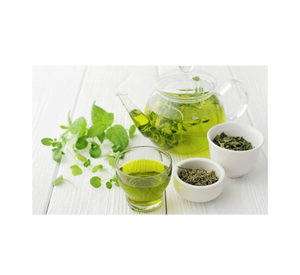
| Green Tea Extract | Camellia sinensis folium | Total Tea Polyphenols / EGCG | Polyphenols ≥98% / EGCG ≥50% (Decaf <0.5%) | HPLC / UV-Vis |
| Tea Saponin Extract | Camellia oleifera seed meal | Total Pentacyclic Triterpenoid Saponins | 70.0% – 90.0% Purity | UV-Vis Spectrophotometry |
| Bacopa Extract | Bacopa monnieri herb | Bacosides A & B | 20.0% – 50.0% Standardized | HPLC / UV |
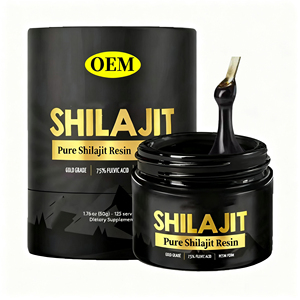
| Himalayan Shilajit | Exudate rock pitch | Fulvic Acid + Trace Ionic Mineral Complex | 50.0% Fulvic Acid (Gold Grade Resin) | Gravimetric / Titration / ICP-MS |
A robust operational framework designed to eliminate regulatory bottlenecks, ensure lot-to-lot bioequivalence, and provide predictable shipping timelines to brands across 50+ countries.
Our responsive technical desk provides rapid regulatory document review, eliminating multi-week approval cycles for complex European and North American dossiers.
Every lot is processed within audited pharmaceutical and food-grade facilities operating under cGMP, ISO 9001/22000, with comprehensive Halal and Kosher compliance options.
Each delivery includes a validated batch Certificate of Analysis (CoA), SDS, non-GMO, allergen, origin certificates, and heavy metal testing profiles.
End-to-end supply chain integration covering air-express validation samples through multi-tonne ocean freight container handling under defined Incoterms.
How cutting-edge biotechnology is transforming botanical manufacturing from simple solvent extraction into precision active delivery.
As competition intensifies in the consumer supplement landscape, brands must differentiate their offerings via scientifically validated claims. This dynamic has catalyzed three primary engineering advancements in modern extraction facilities:
By pre-treating botanical matrices with targeted microbial fermentation enzymes, modern plants biotransform heavy glycosidic flavonoids into aglycone forms. This substantially accelerates human gastrointestinal uptake kinetics.
Through fluid-bed granulators and cryogenic jet-milling, suppliers tailor particle size to specific manufacturing needs—offering non-dusting agglomerates for automated sachet packaging or ultra-fine 200-mesh powders for smooth effervescents.
Novel multi-stage counter-current steam deodorization protocols reduce bitter, astringent herbal notes (e.g., in high-saponin or polyphenol extracts) without damaging heat-sensitive bio-actives, enabling palatable functional food applications.
Direct technical answers addressing documentation compliance, sampling procedures, analytical methods, and global shipping logistics.
Every commercial lot ships with a complete, lot-specific CoA detailing primary marker assay levels (quantified via HPLC or UV), botanical identification, loss on drying, bulk and tapped density, total heavy metal limits (Lead ≤3.0 ppm, Arsenic ≤2.0 ppm, Cadmium ≤1.0 ppm, Mercury ≤0.1 ppm), residual solvent analysis conforming to USP <467>, and microbial testing covering Total Aerobic Microbial Count, Yeasts, Molds, E. coli, and Salmonella spp.
Yes. Our extraction and milling lines support customizable carrier options (including organic maltodextrin, acacia gum, or carrier-free vacuum dried concentrates). We readily calibrate particle sizes between 60 to 200 mesh and customize extract concentrations (from concentrated 10:1/20:1 ratios to high-potency standardized phytochemical markers like 95% Curcuminoids or 90% Saponins) to match specific dosage delivery profiles.
We provide 50g–100g pre-shipment sample (PSS) evaluations for prospective enterprise orders. Pre-shipment samples are drawn directly from the blended commercial batch and are accompanied by its draft lot CoA, enabling complete in-house bench verification, stability screening, and dissolution profiling before the bulk freight departs our facilities.
Standard catalog raw materials maintain rolling stock availability in our regional distribution centers, shipping within 3 to 7 business days. Custom contract extractions typically involve a 3 to 4-week manufacturing and testing cycle. Shipments are supported by export declarations, phytosanitary certificates, Halal/Kosher certificates, certificates of origin, and complete bill of lading/airway bill documentation under EXW, FOB, CIF, or DDP terms.