
Precision-analyzed active marker compounds, fully documented batch traceability, and verified analytical testing across pharmaceuticals, dietary supplements, and functional food matrices.
A comprehensive procurement guide detailing analytical chemistry qualification, chromatography validation, and contamination safety thresholds for tier-one brand manufacturers.
Procuring raw botanical ingredients requires strict marker compound verification. Relying solely on generalized UV spectrophotometry can lead to inaccuracies due to spectral overlap. Our QA operations employ HPLC, UHPLC-MS, and GC-MS to differentiate authentic botanical markers (such as withanolides, curcuminoids, and ginsenosides) from adulterants, verifying phytochemical identity and batch-to-batch consistency.
Compliance across FDA 21 CFR Part 111, EFSA, and international pharmacopeias requires comprehensive control of residual chemicals. Every production lot undergoes rigorous screening via ICP-MS for heavy metals (Pb, As, Cd, Hg), multiresidue GC-MS/MS for 400+ pesticide compounds, and purge-and-trap GC for Class 1 and Class 2 residual extraction solvents.
Unplanned production downtime often traces back to documentation non-conformance rather than transport disruptions. Our export consignments arrive pre-cleared with complete documentation packages: batch-specific Certificate of Analysis (CoA), detailed Flow Charts, BSE/TSE-free Declarations, Allergen Statements, Non-GMO verification, and updated Safety Data Sheets (SDS).
| Botanical Name | Active Marker Compound | Standard Commercial Assay | Validated Assay Methodology | Primary Therapeutic Application |
|---|---|---|---|---|
| Withania somnifera (Ashwagandha) | Total Withanolides | 2.5% – 5.0% w/w | HPLC Analysis | Adaptogenic & Cortisol Modulation |
| Curcuma longa (Turmeric) | Total Curcuminoids | 95.0% Standardized | HPLC (USP Method) | Anti-inflammatory & Cellular Defense |
| Panax ginseng (Korean Ginseng) | Total Ginsenosides | 10.0% – 80.0% | UV-Vis / HPLC Verified | Mitochondrial ATP & Energy Metabolism |
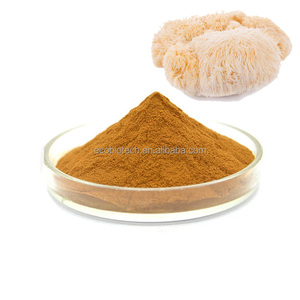
| Hericium erinaceus (Lion's Mane) | Beta-Glucan Polysaccharides | 10.0% – 30.0% | Enzymatic / Colorimetric | Neurogenesis & Cognitive Performance |
| Silybum marianum (Milk Thistle) | Silymarin Complex | 80.0% Standardized | HPLC / UV Spectrometry | Hepatoprotection & Phase-II Detox |
| Boswellia serrata (Frankincense) | Total Boswellic Acids / AKBA | 65.0% / 10%-30% AKBA | Titration / HPLC | 5-LOX Inhibition & Joint Flexibility |
Emerging shifts across botanical synthesis, supply chain transparency, clean-label concentration, and biological bioavailability optimization.
Market demand is transitioning from traditional hydrocarbons (hexane, ethyl acetate) toward green extraction techniques. Supercritical CO₂ extraction and advanced subcritical water processing eliminate chemical residue concerns, yielding full-spectrum solvent-free botanicals favored by clean-label functional food formulations.
Poor water solubility has historically limited the efficacy of hydrophobic molecules like curcuminoids and boswellic acids. Next-generation supply lines leverage lipidic carriers, self-emulsifying drug delivery systems (SEDDS), and gamma-cyclodextrin complexes, achieving up to 15x systemic absorption without artificial additives.
With tightening international regulations on wildcrafted flora, brands require verifiable supply lines. Advanced sourcing mandates carbon-14 (¹⁴C) isotopic testing to rule out petroleum-derived adulteration, backed by integrated farm-level GPS mapping to substantiate ethical harvesting and sustainability standards.
Combining UK technical compliance oversight with an audited global export supply chain for nutraceutical brand manufacturers and CMOs.
We provide localized regulatory oversight. Technical dossiers, compliant documentation, and specification sheets are evaluated by UK compliance professionals to streamline audit clearances.
From high-density direct compression (DC) powders to ultra-fine 120-mesh dispersions, extract physical properties are tailored precisely to your finished manufacturing equipment.
We manage door-to-door temperature-controlled ocean freight and urgent express air deliveries under Incoterms 2020, backed by customs clearance clearance support across 50+ countries.
Before placing production-scale purchase orders, our technical desk provides pilot trial evaluation samples, supported by batch chromatography reports to validate feasibility in your lab.
Direct technical answers addressing international compliance, minimum order quantities, testing standards, and logistics execution.
Every commercial consignment includes a lot-specific Certificate of Analysis (CoA) detailing identity, active marker assay (HPLC/UV), loss on drying, bulk density, particle size mesh, heavy metal quantification via ICP-MS, residual solvents (USP <467>), and micro count. Additional declarations (BSE/TSE, Non-GMO, Allergen, Natural Origins) are delivered with your shipment.
We mitigate risks of synthetic spiking and species substitution through multi-tier laboratory screening. Raw plants are identified via TLC/HPTLC matching botanical references, followed by quantitative HPLC analysis of characteristic isomer ratios. Where synthetic adulteration is a risk, radiocarbon (¹⁴C) analysis verifies natural origin.
Yes. The majority of our botanical extracts are processed without animal-derived aids or non-permitted solvents, retaining active certification under recognized Halal and Kosher bodies. Certifications are updated annually and issued directly alongside quotes.
We work directly with your contract manufacturing operations (CMOs) to align physical parameters. Depending on whether your delivery system is a direct-compression tablet, softgel suspension, or ready-to-mix beverage, we provide custom particle milling (60 to 120 mesh), customized extract ratios (4:1 to 50:1), and carrier-free formulations.
Inventory stock items dispatch within 48 to 72 hours from confirmation. Custom extractions generally require 2 to 3 weeks for synthesis, analysis, and quality sign-off. We support standard Incoterms including EXW, FOB, CIF, CIP, and DDP to simplify international customs clearance.
Pilot-scale development samples (50g to 250g) are available for active R&D formulators and manufacturing facilities. Use our direct contact button to specify your required active assay, desired physical characteristics, and targeted dosage format, and our technical sales team will dispatch samples along with supporting documentation.
Connect with our technical desk for verified batch certificates of analysis, pilot evaluation quantities, and volume contract pricing.
Contact Us