
Establishing Resilient Plant Extract Supply Lines: From Shaanxi to the Industrial Belts of Nigeria
The global botanical and standardized herbal extract sector has transformed over the past decade from artisanal extraction into a highly regulated, technologically complex branch of life sciences. Nigeria, standing as the demographic and industrial powerhouse of West Africa, is witnessing an unprecedented evolution in its domestic manufacturing paradigm. The convergence of tightening foreign exchange availability, an expanding middle class demanding clean-label functional goods, and deliberate governmental incentives to substitute imported finished pharmaceuticals has compelled Nigerian industrial manufacturers to re-evaluate their upstream supply chains.
Historically, finished health products flooded into the commercial epicenters of Lagos, Onitsha, and Aba from foreign brands. However, macroeconomic policies steered by the Central Bank of Nigeria (CBN) and rigorous enforcement by the National Agency for Food and Drug Administration and Control (NAFDAC) have catalyzed a permanent shift: industrial players are no longer content importing finished capsules, blister packs, and bottled elixirs. Instead, contract manufacturers, packaging plants, and large-scale pharmaceutical corporations across Ikeja, Agbara Industrial Estate, and Kano are procuring high-purity, standardized plant extract powders directly from tier-one factories in China to blend, encapsulate, bottle, and distribute domestically.
Technical Reality for R&D Directors: Sourcing botanical extracts is fundamentally different from purchasing standard chemical compounds like paracetamol or ascorbic acid. Plants are biological systems subject to seasonal, regional, and phenotypic variance. Without strict standardization via High-Performance Liquid Chromatography (HPLC) and multi-stage botanical identification, manufacturers face critical batch failure during finished-product quality assays.
Localized Industrial Application Scenarios in Nigeria
The operational success of standardized plant extracts in Nigeria relies on understanding the distinct physical behavior of powdered botanicals under localized manufacturing conditions. West Africa presents specific ambient parameters—notably relative humidity consistently exceeding 75% to 85% in southern coastal facilities like Lagos and Calabar, paired with persistent operational power grid oscillations. Under these conditions, the physical characteristics of powder excipients dictate production efficiency.
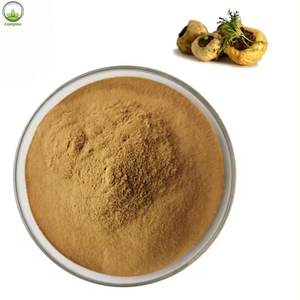
1. Solid-Dose Nutraceutical & Phyto-Pharmaceutical Encapsulation: In factories located along the Lagos-Ogun industrial belt, high-speed rotary capsule filling and tableting presses demand strict bulk density (typically 0.40 to 0.65 g/mL) and minimal hygroscopicity. Botanical extracts like Maca Extract Powder, Kava Root Extract, and Ashwagandha must be processed through specialized fluid-bed granulation or co-spray dried with low-moisture maltodextrin carriers (mesh sizes 80 to 100 mesh) to avoid caking, die-wall friction, and fill-weight variations on automatic encapsulation lines.
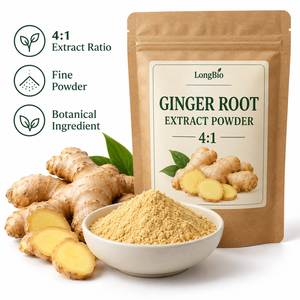
2. Functional Beverage & Ready-to-Drink (RTD) Tonics: The Nigerian non-alcoholic beverage space is undergoing explosive innovation. Brands are pivoting away from simple artificial flavorings toward functional tonics formulated to boost vitality, combat urban fatigue, and enhance metabolic stamina. In these liquid matrices, cold-water clarity and sedimentation velocity are paramount. Ingredients such as Water-Soluble Motherwort Extract Powder and Ginger Root Extract 4:1 are engineered with specific hydrophilic molecular structures, enabling crystal-clear reconstitution without clouding, flocculation, or phase separation under ambient shelf temperatures.
3. Derma-Cosmetics, Hair Care & Topical Treatments: Nigerian consumers are increasingly sophisticated regarding clean dermatological actives. Shea butter, black soap, and native oil matrices produced locally are now being elevated with pharmaceutical-grade actives. Sourcing Natural Witch Hazel Leaf Powder Extract 10:1 allows local cosmetics laboratories to engineer alcohol-free skin toners, hyperpigmentation-mitigating emulsions, and anti-inflammatory scalp treatments with verifiable tannin concentrations, outcompeting unstandardized domestic infusions.
Analytical Benchmark Matrix: Primary Phytochemical Standards
When selecting a primary extraction manufacturer in China, QA officers and procurement directors must mandate verification against harmonized pharmacopeial monographs (USP, Ph. Eur., or CP). Below is the baseline analytical matrix applied to our botanical shipments destined for Nigerian industrial ports:
| Botanical Extract Grade | Target Marker Compound | Standard Assay Method | Heavy Metal Limits (ICP-MS) | Microbiological Safety Profile |
|---|---|---|---|---|
| Star Anise Extract | Shikimic Acid ≥ 98% | HPLC - External Standard | Pb < 2.0 ppm, As < 1.0 ppm | TAMC < 1000 CFU/g, E. Coli: Absent |
| Witch Hazel 10:1 | Total Tannins ≥ 10.0% | UV-Vis Spectrophotometry | Pb < 3.0 ppm, Cd < 0.5 ppm | TYMC < 100 CFU/g, Salmonella: Absent |
| Fisetin Smoke Tree | Fisetin Flavonoid ≥ 98% | HPLC (Isocratic Phase) | Total Heavy Metals < 10 ppm | Pathogen Screen: Negative |
| Ginger Root 4:1 | [6]-Gingerols ≥ 5.0% | HPLC / TLC Fingerprint | Pb < 2.0 ppm, Hg < 0.1 ppm | TAMC < 3000 CFU/g, Mould < 100 CFU/g |
| Kava Root Extract | Total Kavalactones 30%-70% | HPLC Reverse Phase | Compliant with USP <561> | Aflatoxins (B1+B2+G1+G2) < 4 ppb |
Macro-Trends Shaping the Nigerian Phytochemical Market
The commercial trajectory for raw botanical materials in Nigeria over the next decade is governed by three undeniable forces:
Decentralized Secondary Processing: In line with federal industrialization directives, local pharmaceutical conglomerates are investing heavily in extraction-polishing and compounding plants. While raw, high-complexity active pharmaceutical ingredients (APIs) and high-potency extracts will continue to be produced within China’s specialized industrial bioreactors due to economies of scale, preliminary blending, wet granulation, and clinical packaging will entirely localize inside Nigerian territory.
Regulatory Convergence and Post-Market Auditing: NAFDAC’s modernization drive has dramatically narrowed the tolerance for unverified botanical claims. Regulatory submissions now routinely require full botanical identity authentication (including botanical voucher specimens or DNA barcoding documentation), raw material Certificate of Analysis traceable to ISO 17025 accredited labs, and full pesticide multi-residue screening (comprising organochlorines and organophosphates). Chinese manufacturing facilities that provide pre-assembled Common Technical Document (CTD) dossiers directly de-risk the registration timeline for Nigerian manufacturers.
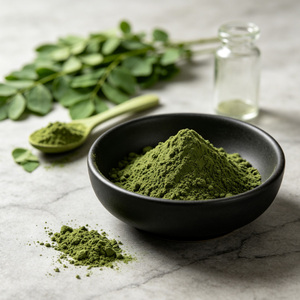
Clean-Label Nutraceutical Formulation: Nigerian consumers are increasingly vigilant regarding chemical fillers, synthetic dyes, and artificial preservatives. Formulators are systematically replacing artificial yellow colorants with natural curcumin and ginger oleoresins, utilizing moringa leaf polyphenols as functional antioxidants in place of BHT, and incorporating plant-derived adaptogens to create premium wellness lines positioned for both local consumption and export across the ECOWAS sub-region under the AfCFTA (African Continental Free Trade Area).