
Formulated to satisfy strict Japanese Pharmacopoeia analytical standards and functional ingredient notification protocols. Each ingredient is batch-documented with verified HPLC profiles, low endotoxin limits, and non-detectable residual extraction solvents.
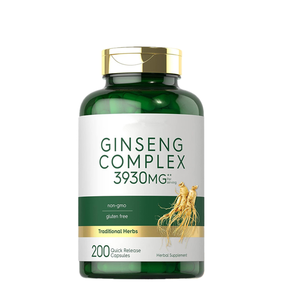
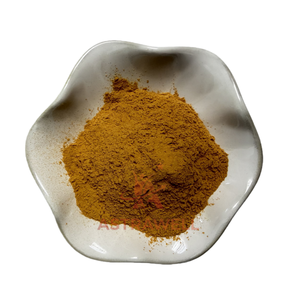
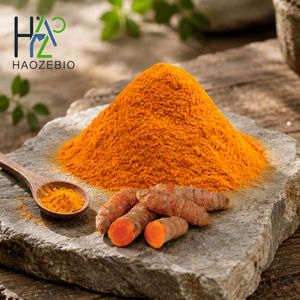
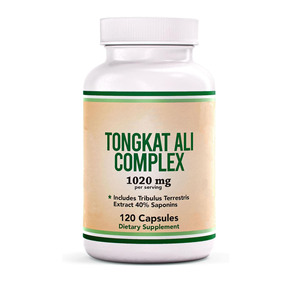
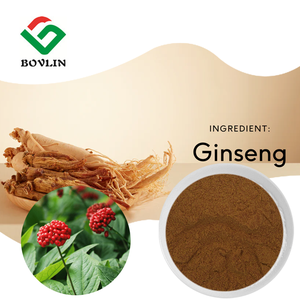
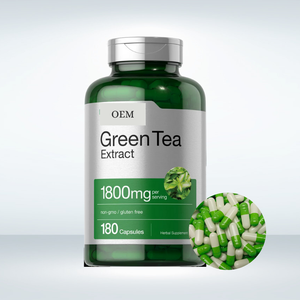
Exporting botanical active pharmaceutical ingredients (APIs) and high-tier functional raw materials to Japan requires compliance that goes far beyond general food-grade testing. Japanese pharmaceutical authorities demand strict conformity with the Japanese Pharmacopoeia (JP 18), the MHLW Positive List System for Agricultural Chemical Residues, and precise non-medicinal classification under the Pharmaceutical and Medical Devices Act (PMD Act / 薬機法).
Our manufacturing facilities operate under comprehensive validated pharmacopoeial controls. Crude herbal extracts intended for ethical Kampo preparations or pharmaceutical compounding undergo testing in strict compliance with JP 18 General Tests for Botanical Extracts, including identification via Thin-Layer Chromatography (TLC), Loss on Drying, Total Ash, and Acid-Insoluble Ash.
Under the Ministry of Health, Labour and Welfare (MHLW) Positive List System, agricultural chemical residues must not exceed uniform default levels of 0.01 ppm unless specific Maximum Residue Limits (MRLs) are designated. We employ multi-residue GC-MS/MS and LC-MS/MS testing covering over 500 pesticide compounds, ensuring smooth quarantine clearance at Japanese ports.
Japan enforces stringent tolerances for inorganic contaminants. Our extraction lines yield heavy metal concentrations well below Japanese thresholds: Lead (Pb) < 2.0 ppm, Arsenic (As) < 1.0 ppm, Cadmium (Cd) < 0.2 ppm, and Mercury (Hg) < 0.1 ppm via ICP-MS. Microbial testing strictly satisfies JP <4.05> criteria (absence of Salmonella, E. coli, and low bioburden counts).
| Quality / Safety Parameter | Standard International Spec | Nutraspect Japan Export Standard | Analytical Methodology | Compliance Status |
|---|---|---|---|---|
| Lead (Pb) Content | ≤ 3.0 – 5.0 ppm | ≤ 1.0 – 2.0 ppm | ICP-MS / Hydride Generation | JP 18 Harmonised |
| Arsenic (As) Content | ≤ 2.0 – 3.0 ppm | ≤ 1.0 ppm | ICP-MS (JP General Test 1.11) | MHLW Certified |
| Pesticide Residue Screen | USP <561> (70 compounds) | MHLW Positive List (>500 residues, ≤0.01 ppm) | Triple Quad LC-MS/MS & GC-MS/MS | Quarantine Exemption |
| Residual Solvents | ICH Class 2 & 3 limits | Class 3 Only (Ethanol/Water, < 3,000 ppm) | Headspace Gas Chromatography (GC-FID) | Zero Toxic Volatiles |
| Botanical Species Authenticity | Macroscopic / TLC | DNA Barcoding & HPLC Chemical Fingerprint | rDNA ITS Sequencing + HPLC Assay | Adulteration Proof |
From the Tokyo pharmaceutical corridor to health-tech incubators in Osaka and consumer goods houses in Shizuoka, our raw extracts are integrated into premier production pipelines across four principal sectors.
Serving secondary raw-material supply lines for traditional Kampo medicines (漢方製剤) and Class 2/3 OTC pharmaceuticals. Standardised Ginsenosides, Glycyrrhizin, and Silymarin extracts are engineered with consistent extraction coefficients and high solubility to match batch extraction procedures for granulation, oral liquids, and decoction tablets.
Japan’s FFC framework allows manufacturers to label scientific health benefits without full pharmaceutical drug review, provided that clinical documentation supports the active marker. Our liposomal curcumin, green tea EGCG, and adaptogenic withanolides supply the precise biomarker quantitation needed to complete Consumer Affairs Agency (CAA) registration files.
The Japanese "J-Beauty" nutricosmetic and quasi-drug space requires botanical actives that deliver skin-brightening, barrier restoration, and anti-photoaging outcomes. Our micro-pulverized, water-dispersible botanical powders blend into collagen sachets, oral jelly cups, and functional drinks without precipitation, off-flavoring, or chromatic degradation over shelf life.
Japan is one of the world's most sophisticated nutraceutical and phytomedical marketplaces. Strategic buyers should note three shifts shaping sourcing decisions nationwide.
With over 29% of its population aged 65 and older, Japan represents an unprecedented market for preventative geriatric botanicals. Demand has surged for pure extracts that support cognitive agility (Panax ginseng ginsenosides), joint elasticity and mobility (Boswellic acids), and metabolic balance (Curcuminoids), fueling continuous expansion in elderly-targeted functional foods and tonics.
Japanese contract manufacturers (CMOs) are moving away from traditional, poorly absorbed crude powders toward advanced bioavailability platforms. Technologies like liposomal encapsulation, phospholipid complexes (phytosomes), and cyclodextrin micro-emulsions have become essential for hydrophobic polyphenols, allowing lower dosage claims with greater physiological efficacy.
Following regulatory scrutiny regarding health supplement safety, Japanese distributors prioritize raw ingredient suppliers who offer uncompromised supply chain transparency. Full batch traceability back to geographical origin, documented absence of genetic modification (Non-GMO), and explicit manufacturing flow charts are non-negotiable for enterprise procurement teams.
We resolve the documentation delays, testing discrepancies, and logistical friction that often impede Western botanical suppliers entering the Japanese market.
Manufactured in facilities operating under cGMP, ISO 9001, and ISO 22000 quality management systems. Japanese QA inspectors are welcomed with pre-compiled technical dossiers, equipment validation logs, and thorough cleaning validation records.
Every batch delivered to Yokohama, Tokyo, or Kobe is accompanied by an extensive Certificate of Analysis (CoA), Safety Data Sheet (SDS), residual solvent declaration (ICH Q3C), non-irradiated certificate, TSE/BSE-free statement, and allergen declaration.
We calibrate particle size distributions (80 mesh to ultra-fine 200 mesh), tapped/bulk density parameters, carrier substrates (maltodextrin, acacia gum, or 100% pure carrier-free), and standardized marker compound concentrations to fit your tableting or encapsulation lines.
With goods exported to over 50 countries, our logistics network provides steady temperature-controlled air and sea freight lines directly into Tokyo (NRT/HND) and Osaka (KIX/UKB), backed by clean commercial invoices and HS-code tariff classifications.
Speed up your analytical validation. We supply 100g to 500g pilot batch samples alongside lot-specific chromatograms, enabling your internal quality laboratories to verify assay retention and impurity profiles before booking commercial orders.
Insulate your production forecasts against raw botanical harvest volatility. We provide fixed annual procurement contracts, bonded inventory reserving, and predictable delivery windows to safeguard your commercial production schedule.
A structured four-step procurement framework that reduces onboarding lead times from months to weeks.
Share target marker assays, particle sizing (mesh), finished format (solid/liquid), and PMDA non-drug criteria.
Receive our complete specification file, representative HPLC/GC chromatograms, SDS, allergen declarations, and sample CoA.
Test analytical samples in your own QA laboratory for active assay consistency, solubility, flowability, and microbial limits.
Lock in scheduled orders with confirmed Incoterms (CIF/DDP), customs documentation, and batch traceability certificates.
Addressing critical regulatory, testing, and logistical inquiries commonly encountered during our qualification with Japanese enterprises.
Every export lot destined for Japan undergoes comprehensive multi-residue pesticide testing via LC-MS/MS and GC-MS/MS protocols covering over 500 chemical active substances. If an agrochemical lacks a specific designated MRL under Japanese regulation, our internal release standard strictly verifies that residue concentrations remain below the uniform 0.01 ppm limit, avoiding customs delays at Narita, Haneda, or Port of Tokyo.
Yes. For clients formulating pharmaceutical-grade products or quasi-drugs (医薬部外品), we offer dedicated extract grades that comply with specific JP monographs. This includes verification of TLC identification, limits on drying loss, acid-insoluble ash, heavy metals (≤ 10-20 ppm total, As ≤ 2 ppm, Pb ≤ 5 ppm), and active HPLC assay standardization according to current JP 18 general tests.
For brands notifying under the FFC (機能性表示食品) regime with the Consumer Affairs Agency (CAA), we provide robust analytical substantiation: quantitative HPLC assay confirmation of the functional substance (e.g., Curcuminoids, EGCG, Withanolides), validation of analytical test methodology, stability study data, and safety dossiers confirming history of safe use and purity testing.
We prioritize green, clean-label extraction. The vast majority of our botanical extracts for Japan are manufactured using only potable water, pharmaceutical-grade ethanol, or supercritical CO2. Toxic Class 1 solvents are strictly excluded from our manufacturing units, and Class 2 solvents are avoided. Any residual Class 3 ethanol is evaporated to levels well below 3,000 ppm, conforming to ICH Q3C guidelines.
Every dispatch includes a batch-specific Certificate of Analysis (CoA) referencing tested values rather than generic ranges, a formal Certificate of Origin, Safety Data Sheet (SDS), Packing List, Commercial Invoice with correct HS Classification, Non-Irradiation Certificate, Non-GMO Statement, Allergen Declaration, and BSE/TSE-Free Guarantee.
For pilot formulation and internal laboratory validation, pre-shipment evaluation samples (100g to 500g) are dispatched via international courier (DHL/FedEx) within 3 to 5 working days, accompanied by complete paperwork. Commercial MOQs typically start from 25 kg in fiber drums with sealed double food-grade polyethylene inner liners, with bulk volume scalability exceeding several metric tons.
In Japan, whether a botanical is treated as an unlicensed pharmaceutical or a food depends on the "List of Ingredients Exclusively Used as Pharmaceuticals" and the "Non-Drug List" maintained by the MHLW under the PMD Act (薬機法). We review botanical species nomenclature (including botanical parts utilized, e.g., root vs. aerial parts) and provide botanical verification statements to help ensure your selected ingredient falls safely within food classifications.
Yes. Modern Japanese automated encapsulation and high-speed sachet filling machines require exact powder rheology. We offer tailor-made physical milling and granulation services to adjust particle size (e.g., from 60 mesh for direct compression up to 200 mesh for instant dispersion) and tightly monitor bulk/tapped density to prevent bridging or dosing variability on production lines.
Consult with our technical sales specialists to request batch documentation, verify Japanese Pharmacopoeia monograph alignment, or arrange pilot evaluation samples for your technical and QA review.