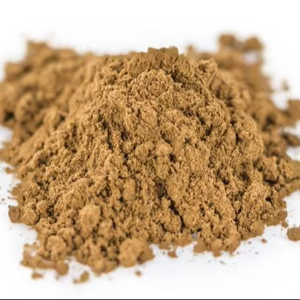
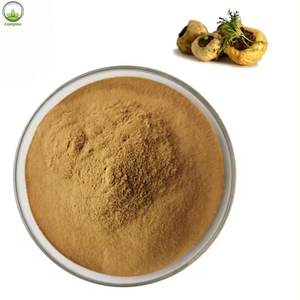
Chicago and the greater Illinois-Wisconsin corridor serve as the epicenter of North American food science, contract bottling, and dietary supplement manufacturing. We bridge global agricultural direct sourcing with strict domestic QA protocols, supplying batch-certified active botanical extracts with comprehensive analytical documentation.
Engineered for stability in direct compression, high-speed encapsulation, and cold-fill functional RTD processing.
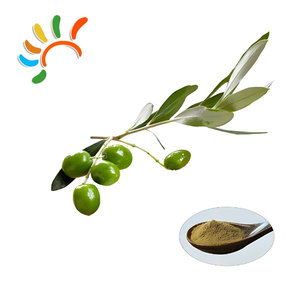
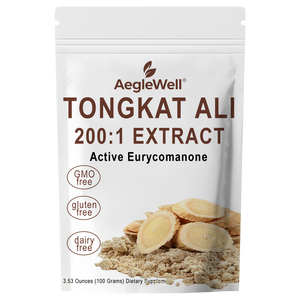
As the dietary supplement and functional nutrition sectors scale across North America, the demand for verified adaptogenic botanicals has reached unprecedented heights. Within the greater Chicago metropolitan area—a central hub housing tier-one contract manufacturers (CMOs), brand incubators, and extensive food-processing infrastructure across Cook, DuPage, and Lake Counties—procurement protocols have evolved dramatically. Sourcing departments no longer evaluate botanical raw materials purely on crude extraction ratios (e.g., 10:1 or 20:1); technical buyers demand exact, validated marker compounds verified via High-Performance Liquid Chromatography (HPLC).
Ashwagandha (Withania somnifera, Solanaceae family) derives its clinical bioactivity from steroidal lactones known comprehensively as withanolides, most notably Withaferin A, Withanolide A, and Withanolide D. When manufacturing standardized Ashwagandha root extract powder for the Chicago marketplace, chemical fidelity, the absence of aerial adulterants, and rigorous impurity screening dictate commercial success. The Chicago processing corridor demands ingredients that survive dynamic physical environments, from high-speed rotary tablet presses requiring specific bulk tap densities to sparkling adaptogenic beverage formulation requiring high aqueous clarity without sensory precipitation.
The manufacturing footprint of the Midwest imposes distinct logistical and formulation demands. Suppliers serving contract formulation facilities across Elk Grove Village, Fulton Market food-science pilot laboratories, and packaging lines in Aurora must tailor raw materials to specific technical parameters:
Chicagoland contract packaging operations run automated encapsulation machines reaching speeds up to 150,000 capsules per hour. Our Ashwagandha powders are milled to 80-100 mesh, displaying controlled tapped bulk densities (0.45–0.65 g/mL) and superior angle-of-repose flowability, minimizing line stalling and eliminating excipient over-reliance.
Driven by the booming Chicago beverage incubator movement, our cold-water-dispersible (CWD) Ashwagandha variants undergo proprietary agglomeration and carrier-assisted spray drying. The result is instant dispersion without sediment fallout, compatible with cold-fill tunnel pasteurization and clean organoleptic masking.
With gummy delivery formats commanding major market share in consumer wellness, our extract exhibits superior thermo-stability through the 105°C–120°C cook temperatures required during confectionery boiling cycles, preserving marker integrity without degrading active withanolide profiles.
Procurement teams in the Illinois corridor operate under strict FDA 21 CFR Part 111 cGMP regulations, coupled with increasing retailer demand for clean label declarations (Non-GMO Project Verified, USP Dietary Supplement Verification, Kosher, and Halal certifications). The prevailing trends impacting botanical sourcing across the Midwest include:
1. Traceability and Root-Identity Assurance: Adulteration via inexpensive Ashwagandha leaf extracts or non-declared maltodextrin carriers has triggered Chicago-area QA directors to enforce strict HPTLC (High-Performance Thin-Layer Chromatography) fingerprinting against USP botanical reference standards prior to lot acceptance.
2. Heavy Metal and Contaminant Strictures: Because Chicago products are distributed nationally, raw materials must satisfy the strictest US statutory limits, particularly California Proposition 65 benchmarks: Lead (Pb) < 0.5 mcg/day, Arsenic (As) < 10 mcg/day, Cadmium (Cd) < 4.1 mcg/day, and Mercury (Hg) < 0.3 mcg/day. Every lot delivered into the Midwest market is pre-screened via ICP-MS.
| Analytical Parameter | Commercial Commodity Grade | Our Pharmaceutical Standard (Midwest Grade) | Validation Methodology |
|---|---|---|---|
| Withanolide Content | 1.0% – 1.5% (Often non-specific UV) | 2.5% – 5.0% Guaranteed Total Withanolides | HPLC (USP Method) |
| Withaferin A Profile | Unmonitored (Exceeds 1.5%) | Controlled Trace (<0.1% or Custom Spec) | HPLC Analysis |
| Botanical Sourcing | Mixed Aerial Stems, Leaves & Root | 100% Selected Withania somnifera Roots | HPTLC Botanical Fingerprint |
| Residual Solvents | Variable USP 467 Compliance | 100% Water/Ethanol Clean Extraction; Class 1 & 2 Free | GC-MS Screening |
| Heavy Metals (Pb, As, Cd, Hg) | Total < 20 ppm | Total < 5 ppm; Conforms to Prop 65 / USP | ICP-MS Inductively Coupled Plasma |
Procuring raw botanical ingredients across global borders introduces friction: delivery delays at ocean terminals, inconsistent batch-to-batch assay levels, and missing compliance documentation that stalls pilot production runs. As an internationally structured botanical manufacturer and dedicated exporter, our service framework eliminates these friction points:
Extracts originate exclusively from facilities managed under ISO 9001, ISO 22000, and certified cGMP infrastructure, supported by active Kosher and Halal accreditation certificates delivered directly to your QA audit department.
Every commercial drum is accompanied by an unbroken document trail: Lot-Specific Certificate of Analysis (CoA), Safety Data Sheet (SDS), Technical Data Sheet (TDS), Allergen Declarations, GMO Statements, and TSE/BSE Non-Contamination statements.
Leveraging O'Hare International Airport (ORD) multimodal logistics and regional rail corridors, we facilitate streamlined customs clearance, DDP/CIF incoterms, and reliable scheduled shipments to eliminate line downtime for Midwest CMOs.
Direct technical answers addressing regulatory compliance, shipping logistics, and batch customization for our botanical extracts.
We mandate High-Performance Liquid Chromatography (HPLC) according to standardized USP monograph guidelines. While non-specific UV-Vis spectrophotometry can artificially inflate withanolide readings by reacting with non-active phytosterols, our HPLC testing provides definitive chromatographic quantification of both Withanolide A, D, and Withaferin A fractions.
We provide full qualification packages including manufacturer flowcharts, solvent usage declarations (100% water/grain ethanol), foreign body control measures, pest management records, third-party laboratory verification data, and signed statements regarding non-irradiation and ethylene oxide (EtO) sterilization absence.
Yes. We routinely supply 100g to 500g analytical test samples to contract packaging labs and brand formulation kitchens in Chicago, Schaumburg, Downers Grove, and surrounding manufacturing zones, accompanied by matching lot CoAs to conduct pilot encapsulation and organoleptic trials.
Yes. Beyond standard 80-mesh powders, we offer superfine 120-mesh specifications for instant drink blends, alongside custom granulations for direct-compression tableting. Carrier options can be tailored to non-GMO maltodextrin, organic acacia fiber, or 100% excipient-free pure extract depending on label architecture.
We support multiple shipping terms including FOB, CIF (Chicago dry ports), and DDP directly to your manufacturing warehouse dock. Air expedited shipments are routed directly via ORD (Chicago O'Hare), while bulk sea freight consignments are managed through coordinated East Coast or West Coast rail-intermodal routes.
Every commercial harvest batch undergoes rigorous Inductively Coupled Plasma Mass Spectrometry (ICP-MS) testing. Heavy metals are held to stringent thresholds: Lead < 0.5 ppm, Cadmium < 0.5 ppm, Arsenic < 1.0 ppm, and Mercury < 0.1 ppm, providing total confidence for brands distributing nationwide from Midwest distribution centers.