
Navigating the Global Ecosystem of Standardized Botanical Extracts
In the global nutraceutical, functional food, and pharmaceutical landscape, the shift from crude herbal powders to strictly standardized plant extracts represents the single most significant development in modern phytochemistry. Standardized plant extracts eliminate the erratic biological variability inherent in agricultural crops, guaranteeing that every kilogram delivered contains an exact, quantified concentration of target marker compounds—such as withanolides, curcuminoids, ginsenosides, or chlorogenic acids.
Selecting a manufacturing partner requires far more than comparing quotation sheets. Procurement directors, analytical chemists, and regulatory officers operate in an environment fraught with supply chain adulteration, fluctuating marker compounds, unauthorized enzymatic fortification, and evolving pesticide thresholds under the United States Pharmacopeia (USP), European Pharmacopoeia (EP), and British Pharmacopoeia (BP). This industry dossier outlines the definitive evaluation benchmarks governing tier-one botanical manufacturing facilities and charts strategic procurement methodologies for 2025 and beyond.
Information Gain Note for QA Formulators
Crude extract ratios (e.g., "10:1" or "20:1") without quantified active marker analytical confirmation (HPLC, GC-MS, or UV-Vis) do not meet modern international regulatory scrutiny. Real standardization requires quantified bioactive yield validation with documented chromatographic retention times and reference standard calibrations.
Top 10 Evaluation Criteria for Plant Extract Manufacturers & Factories
Enterprise sourcing teams evaluating industrial extraction plants must measure vendors against the following ten non-negotiable operational and technical criteria before initiating commercial supplier qualification:
1. Validated Chromatographic Assays
Verification that active concentrations are determined by specific, stability-indicating HPLC or UHPLC-MS/MS methods rather than non-specific UV spectrophotometric assays that can be easily masked by non-target polyphenols or synthetic adulterants.
2. Pharmacopeial Impurity Limits
Strict batch-level compliance with heavy metal limits (Pb ≤ 0.5 ppm, As ≤ 1.0 ppm, Cd ≤ 0.5 ppm, Hg ≤ 0.1 ppm), polycyclic aromatic hydrocarbons (PAH4), and zero detectable ethylene oxide (EtO) residues across all lots.
3. DNA Barcoding Botanical Identity
Implementation of genomic testing (ITS2 and matK/rbcL sequencing) and High-Performance Thin-Layer Chromatography (HPTLC) fingerprinting to eliminate adulteration with closely related, lower-cost botanical species.
4. Solvent Recovery & Green Tech
Utilization of eco-conscious extraction systems, including continuous counter-current water extraction, supercritical CO2 fractionation, and Class-3 ethanol systems with vacuum closed-loop recovery minimizing residual VOCs.
5. Particle Engineering & Flowability
Advanced spray-drying towers equipped with fluidized bed granulation capabilities to achieve precise tapped bulk densities, 80-120 mesh particle distributions, and instant cold-water dispersibility for functional formulations.
6. Controlled Supply Chain & GAP
Direct farm-level integration backed by Good Agricultural and Collection Practices (GACP), ensuring raw biomass cultivation is isolated from industrial runoff, heavy metal rich soils, and illegal synthetic pesticides.
7. Comprehensive Regulatory Dossiers
Immediate turnkey access to documentation packages: SDS, allergen declarations, non-GMO statements, BSE/TSE-free certificates, irradiation-free declarations, and technical technical questionnaires compliant with FDA 21 CFR 111.
8. Third-Party Laboratory Cross-Validation
Independent corroboration of CoA metrics via internationally accredited ISO 17025 partner laboratories (e.g., Eurofins, SGS, Intertek) to eliminate vendor-favoring analytical bias and guarantee release confidence.
9. Religious & Ethical Accreditations
Full facility accreditations for Halal (MUI/JAKIM compliant) and Kosher (Star-K/OU compliant), assuring production lines undergo rigorous annual rabbinical and Islamic audits devoid of pork or prohibited enzyme co-processing.
10. Capacity Buffer & Price Stability
Multi-metric commercial agility: multi-ton warehouse inventory buffers in Western transit hubs (such as the UK and EU) to protect brand partners against crop failures, localized geopolitical interruptions, and erratic air-freight pricing.
Standardized Extract Analytical Reference Matrix
Formulators must understand the precise active marker compounds, botanical parts utilized, and standardized assay methods when authoring raw material specifications. The table below represents commercial standardizations widely recognized by brand-name functional manufacturers:
| Botanical Name | Common Name | Part Utilized | Standardized Active Marker | Testing Methodology | Procurement Status |
|---|---|---|---|---|---|
| Withania somnifera | Ashwagandha | Dried Root | Withanolides 2.5% to 5.0% | HPLC (USP Monograph) | Stocked Bulk |
| Curcuma longa | Turmeric | Rhizome | Total Curcuminoids ≥ 95.0% | HPLC (EP Reference) | Stocked Bulk |
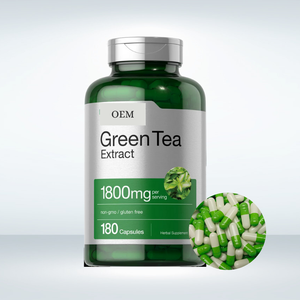
| Camellia sinensis | Green Tea | Foliage | EGCG ≥ 50.0% / Caffeine <0.5% | HPLC / Dual Detection | Stocked Bulk |
| Lonicera japonica | Honeysuckle | Flower Bud | Chlorogenic Acid 5% to 25% | HPLC (Isocratic Run) | Available |
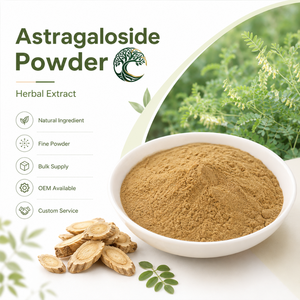
| Astragalus membranaceus | Huang Qi | Root Core | Cycloastragenol 98% / Astragalosides | HPLC-ELSD / LC-MS | High Purity Isolate |
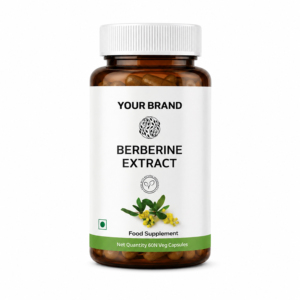
| Berberis aristata | Indian Barberry | Bark / Root | Berberine Hydrochloride ≥ 97.0% | Titration / HPLC | Stocked Bulk |
| Ganoderma lucidum | Reishi Mushroom | Fruiting Body | Beta-1,3/1,6-Glucans ≥ 30% | Enzymatic Assay (Megazyme) | Bulk Extraction |
Future Procurement Trends in the Standardized Plant Extracts Market
The procurement of botanical actives is undergoing rapid technological modernization driven by tightening regulatory demands and informed consumer scrutiny. B2B buyers who leverage these four structural trends will secure an unassailable supply chain advantage:
1. AI-Driven Agricultural Analytics & Climate-Resilient Biomass
Unpredictable weather events have historically wrecked havoc on botanical harvests, resulting in wide fluctuations of secondary metabolite synthesis. Premier extract factories are now partnering with agricultural cooperatives using drone-assisted multispectral imaging and soil-sensor IoT devices. By harvesting at the exact physiological peak of active concentration, factories maintain consistent starting biomass potency, buffering commercial buyers from climate-induced price shocks.
2. Pharmacopeia Harmonization & The Universal Technical File
With multinational supplement brands exporting finished goods to the United States, United Kingdom, European Union, and ASEAN simultaneously, ingredients must clear disparate contaminant thresholds. Forward-thinking suppliers no longer manufacture separate batches for different regions. Instead, they formulate to the single tightest global standard—for instance, adhering to EP pesticide limits (covering over 450 compounds) while concurrently complying with California Proposition 65 heavy metal thresholds.
3. Elimination of Petrochemical Solvents for Subcritical & Green Extraction
Solvents such as hexane, dichloromethane, and benzene-contaminated toluene are facing outright phaseouts. Sourcing trends favor suppliers investing in Supercritical Fluid Extraction (SFE-CO2), ultrasonic-assisted aqueous systems, and certified organic bio-ethanol processing. Formulators increasingly demand zero volatile organic residues (VOCs) to preserve clean-label marketability on retail shelves.
Product Development Trends: Bioavailability, Synergy & Nano-Carrier Formulations
The major challenge facing herbal phytochemicals has historically been poor physiological bioavailability. Active compounds such as berberine, curcuminoids, and withanolides often exhibit low solubility in aqueous gastric environments and rapid hepatic first-pass glucuronidation. Industrial R&D is solving these barriers through sophisticated delivery architectures:
1. Liposomal Encapsulation and Self-Microemulsifying Systems (SEDDS)
By encapsulating hydrophobic plant actives within phospholipid bilayer vesicles, manufacturers are achieving up to 9-fold to 25-fold increases in human plasma area-under-the-curve (AUC) compared to unformulated native powders. This enables clinical supplement brands to formulate smaller, single-capsule daily doses while supporting premium efficacy claims.
2. Adaptogenic Synergy and Standardized Multi-Complexes
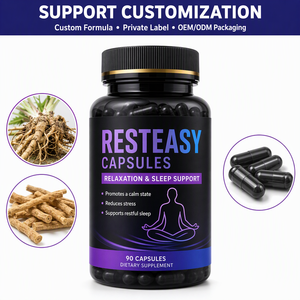
Stand-alone single-herb SKUs are increasingly commoditized. Forward-looking brands are deploying targeted, synergistic phytochemical matrices—pairing Withania somnifera (cortisol attenuation) with Valeriana officinalis (GABA receptor agonist), or blending multi-mushroom beta-glucan fractions (Reishi, Cordyceps, Lion's Mane) for multi-pathway immune balance. Extract manufacturers capable of pre-blending, co-extracting, and granulating multi-herb active complexes under a unified Certificate of Analysis are winning enterprise contracts.
Why Enterprise Formulators Partner With Our Manufacturing Facility
Operating with UK-led technical oversight and deep-tier Asian manufacturing partnerships, we eliminate the traditional friction of importing and qualifying overseas raw botanical materials. Here is our operational guarantee to our manufacturing and private-label partners:
Rigorous Technical Due Diligence
We believe that procurement delays are caused by paperwork issues, not production capacity. We eliminate approvals friction up-front:
- Comprehensive technical dossier released within 24 hours of inquiry.
- Lot-specific CoAs including HPLC retention chromatograms and spectral match.
- Microbiological control via steam sterilization without ionizing radiation.
- Full allergen, BSE/TSE, solvent residual, and non-GMO affirmations.
UK Account Leadership & Global Shipping
Seamless procurement operations tailored to European, North American, and global contract packers:
- Headquartered in the UK: same-time-zone communication for Western enterprise teams.
- Shipment clearance to over 50 countries with verified customs tariffs (HS Codes).
- Flexible DDP, FOB, and CIF delivery terms with predictable transit lead times.
- Pre-shipment production lot pilot samples available for private R&D lab testing.